

We’re on a mission to enable early detection of lung cancer to help ensure patients get timely care.
Lung cancer is the leading cause of cancer-related death worldwide*
Estimated five-year survival rate when lung cancer is diagnosed at stage 1B**
Estimated five-year survival rate when lung cancer is diagnosed at stage 4A**
Awareness of the signs and symptoms may help increase the chance of finding the disease before it spreads.
* Based on World Health Organization — GLOBOCAN 2022 data; estimated 1,817,469 deaths from lung cancer.
** Based on 58,108 cases from the International Association for the Study of Lung Cancer (IASLC) database of patients diagnosed with non-small cell lung cancer between 2011 and 2019 in 25 countries, using the 8th edition of the TNM system. For stage 1B, n=5,577; for stage 4A, n=8,341.
In the fight against lung cancer, early detection can be critical
Globally, some countries have rolled out national lung cancer screening programs. However among countries that have launched these initiatives, participation is low.
Mission Lung Cancer brings together our efforts to break down the barriers that stand in the way of early detection of lung cancer.
Our goal is to enable early detection of lung cancer to help ensure patients get timely care. Through initiatives grounded in strategic collaborations, scientific insights and innovative technologies, we’re working to be the catalyst for change.
“I became a medical oncologist for one reason: to help people with cancer. That’s why I’m proud to be part of an organization that is driving research aimed at improving the lives of patients with cancer. As a physician and clinical investigator for more than 20 years, I understand the importance of finding and treating cancer while it’s still in earlier stages.”
— Dr. Marjorie Green
Senior vice president and head of oncology, global clinical development
Turning data into scientific insights in the fight against lung cancer
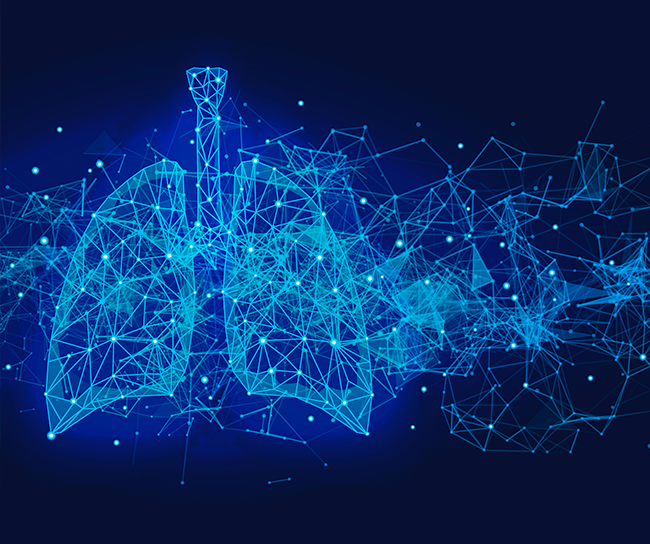
At the heart of our commitment to the early detection of lung cancer is one of our most powerful contributions: scientific insights. Our real-world evidence research uses data to analyze patient journeys and risk prediction models. This enables us to better understand diagnostic pathways and identify opportunities to help facilitate early diagnosis and detection.
Our applicable areas of research include:
- Continuing to address smoking as the leading risk factor for lung cancer, while also identifying additional contributing risk factors
- Pinpointing moments to engage at-risk individuals
- Building explainable risk prediction models, including for early-stage non-small cell lung cancer (NSCLC)
We believe it’s critical to advance this work through research outside our company. That’s why we’ve also expanded our Investigator Studies Program (MISP) to support independent research that’s:
- Evaluating tools and methods for lung cancer risk assessment
- Exploring new technologies, like artificial intelligence (AI) and digital diagnostics, with the goal of improving early detection and diagnosis of lung cancer
- Driving patient engagement in communities that may be underrepresented in current lung cancer screening guidelines
Together, MSD’s real world evidence research and MISP-supported research have the potential to reshape how and when lung cancer may be found.

AI's role in lung cancer detection
AI tools have the potential to enhance established imaging and diagnostic methods to help identify indicators of lung cancer.
We’re investigating how utilizing AI with existing clinical imaging and diagnostic methods can help lead to early detection and diagnosis of lung cancer.
“We’ve seen incredible progress in the fight against cancer in recent decades, driven by advances in early detection and the availability of new treatment options. This progress makes me optimistic for a future where cancer is detected and treated as early as possible.”
— Dr. Gregory Lubiniecki
Vice president, oncology clinical research

Advancing Mission Lung Cancer together
We’re actively working across the oncology community, including with advocacy and industry partners, health care providers and governments, with the ambition to advance sustainable improvements in the early detection of lung cancer.
From raising awareness to helping support access to recommended cancer screenings, this is one of the ways we’re taking meaningful steps forward:
Our commitment to oncology
We work with urgency to pursue breakthrough science to not only prolong lives, but protect them, too. Because people with cancer deserve more.
We’re committed to advancing cancer research with one of the largest development programs in the industry across more than 30 tumor types. Learn about our work in oncology.