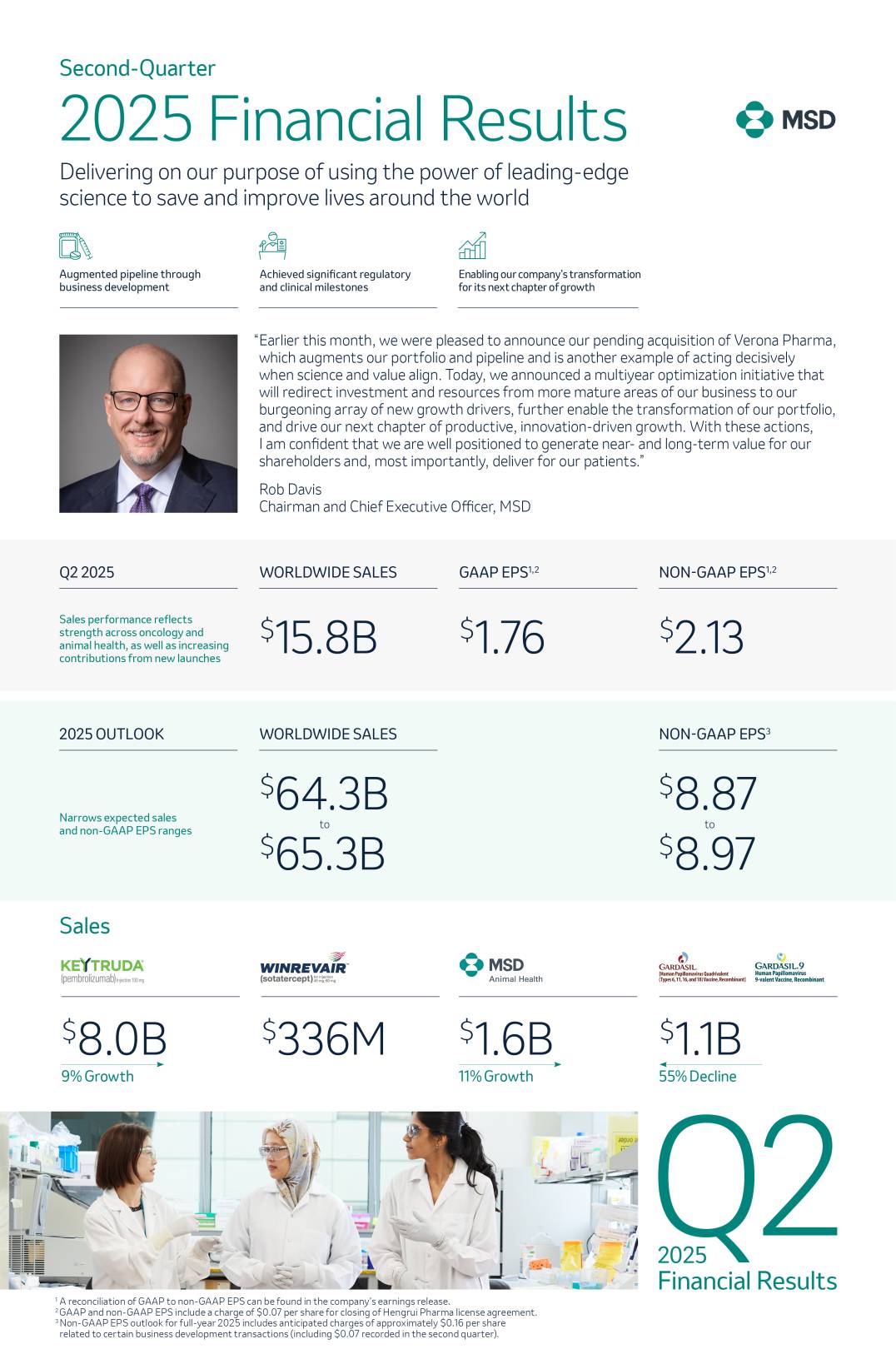
MSD’s Q2 2025 sales performance reflects strength across oncology and animal health, as well as increasing contributions from new launches. Our company announced Q2 worldwide sales of $15.8 billion.
“Earlier this month, we were pleased to announce our pending acquisition of Verona Pharma, which augments our portfolio and pipeline and is another example of acting decisively when science and value align,” said Rob Davis, chairman and CEO. “Today, we announced a multiyear optimization initiative that will redirect investment and resources from more mature areas of our business to our burgeoning array of new growth drivers, further enable the transformation of our portfolio, and drive our next chapter of productive, innovation-driven growth. With these actions, I am confident that we are well positioned to generate near- and long-term value for our shareholders and, most importantly, deliver for our patients.”
MSD anticipates full-year 2025 worldwide sales to be between $64.3 billion and $65.3 billion.
Take a look at the infographic below for more details on Q2 2025 results.
MSD scientists research oncogene mutations driving cancer growth
July 22, 2025
Share this article
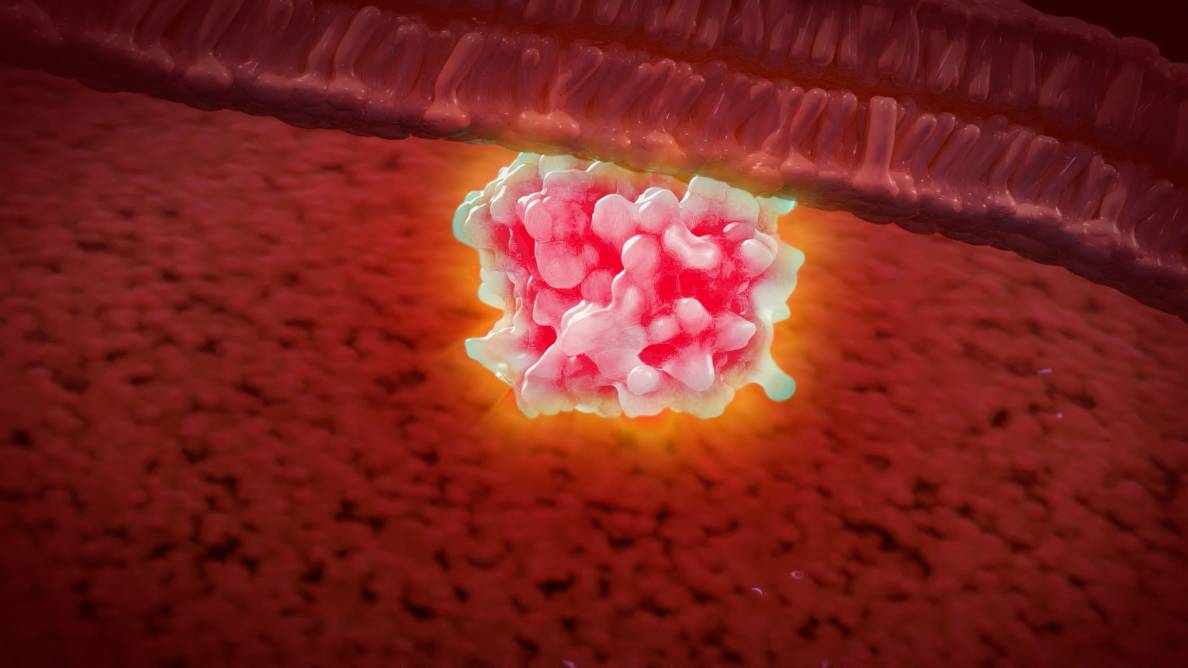
3D depiction of KRAS protein complex
How oncogenes like KRAS drive cancer growth
Armed with an ever-deepening understanding of cancer biology and advanced precision medicine tools, scientists have traced the molecular basis of cancer cell formation and tumor growth to alterations in key genes, known as oncogenes. Oncogenes play a crucial role in driving cancer growth by disrupting normal cellular processes that control cell growth and division.
When oncogenes are mutated, they cause cells to grow and divide uncontrollably, leading to tumor formation and cancer development. Understanding how oncogenes drive cancer development provides a potential means to explore new research approaches aimed at the specific genetic drivers of a patient’s cancer compared with a one-size-fits-all approach.
KRAS is one of the most frequently mutated oncogenes found in cancer. In healthy cells, KRAS serves as an on-off switch that regulates cell growth. However, when the gene is mutated, KRAS can become stuck in the “on” position, causing uncontrolled cancer cell growth and proliferation. Several different mutations of KRAS have been identified, and commonly found types include G12C, G12V and G12D.
The KRAS G12C mutation occurs in approximately 14% of non-small cell lung cancer (NSCLC) and 3-5% of colorectal cancers.
“We now know there’s no one-size-fits-all approach to treating cancer. By focusing on key oncogenes like KRAS, we’re exploring how to harness precision approaches to potentially impact tumor growth at its source.”
Dr. Jane Healy Vice president and head of oncology early development, MSD Research Laboratories
Advances in targeting KRAS
Despite decades of research, the smooth, spherical structure of the KRAS protein hindered efforts to impact its activity on a molecular level. That’s because chemists often look for places to engage with the protein on its surface, like crevices or cracks.
After 40 years of research and informed by a greater understanding of the detailed structure of the KRAS protein, scientists have discovered ways to engage with a pocket that appears on KRAS when the protein is maintained in an inactive state.
“As we advance our KRAS research efforts, we’re hopeful that we may uncover new ways to impact the underlying processes that fuel cancer growth.”
Dr. Marjorie Green Senior vice president and head of oncology, global clinical development, MSD Research Laboratories
Today, our scientists are building on these findings to advance potential targeted approaches in oncology research. Our precision oncology research efforts are a key tenet in our robust oncology pipeline.
We’re pursuing innovative science with antibody-drug conjugate (ADC) research
MSD scientists are evaluating ADCs to explore novel treatment approaches in both solid tumors and blood cancers
May 27, 2025
Share this article
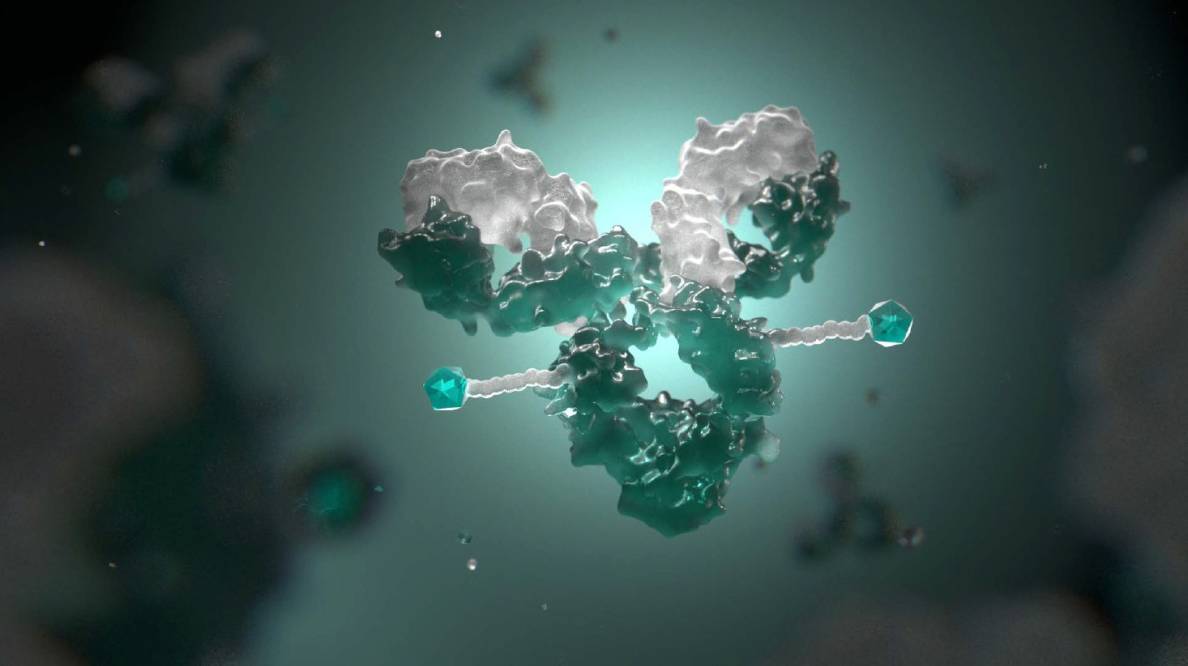
3D depiction of an antibody-drug conjugate molecule
What are antibody-drug conjugates (ADCs)?
ADCs are a targeted means to transport and deliver chemotherapy to tumor cells. More than two decades since the first approval of an ADC, scientists continue to explore how, by leveraging novel scientific advancements, they can find new ways to better design and develop these molecules in order to better address current unmet needs in cancer treatment.
ADCs are made up of three distinct yet equally important elements — an antibody, a linker and a cytotoxic drug/chemotherapy payload. These elements work together to transport the chemotherapy payload to a specific target expressed on the surface of a cancer cell, bind to the target and then be absorbed into the cell to release the chemotherapy.
Anatomy of an ADC
The antibody serves as the targeting mechanism, like a zip code helping to direct the delivery of the chemotherapy agent to cancerous cells.
The payload, or the chemotherapy agent, is responsible for working to destroy the cancer cell when it’s released.
The linker attaches the chemotherapy agent to the antibody and triggers the release of the chemotherapy agent once inside a cancerous cell.
Watch an animation of an ADC in action
Advancements in the scientific research behind ADCs
Since ADCs were first introduced in 2000, the chemistry and science behind these molecules has advanced significantly, and scientists have developed a greater understanding of what makes a good ADC target and how to design ADCs more effectively.
Tumor antigens, or proteins expressed on the outside of a cancer cell, are what an antibody initially binds to. Scientists now know that characteristics like how quickly an antigen is brought inside the cell and whether an antigen is recycled back to the cell surface are crucially important.
“Imagine ADCs as specialized agents that recognize and bind to specific tumor antigens on cancer cells. Once they attach to these antigens, ADCs are internalized by the cell, allowing the chemotherapy agent to be released directly inside, delivering the treatment where it’s needed most — at the core of the cancer cell.”
Dr. Omobolaji Akala Associate vice president of oncology early development, MSD Research Laboratories
There have also been notable advancements in both linker and payload chemistry. Scientists have been focused on improving the stability of linkers and reducing the risk of payload release in the body, as well as evaluating where and how many molecules can be incorporated into the payload. Combined, these advancements may help in reducing damage to nearby healthy cells, while releasing a potent payload precisely within a cancer cell.
This evolving understanding of the science is fueling innovative research efforts with the goal of bringing more effective ADCs to patients.
“We’ve learned that designing ADCs is about balancing the right level of tumor antigen expression, the right potency of a cytotoxic agent in the payload, addressing the cell biology through that payload and engineering a payload to release at the right time and in the right place.”
Dr. Marjorie Green Senior vice president and head of oncology, global clinical development, MSD Research Laboratories
Exploring ADC targets
We’re focusing on proteins associated with poor prognosis across both solid tumors and blood cancers to expand the impact of ADC therapies and address the needs of more patients. Our scientists are also combining ADCs with other innovative treatments such as immunotherapies and T-cell engagers.
By exploring the potential of a broad range of ADC targets and applying new technologies — such as novel linker chemistries, optimized payloads and combination strategies with other therapies — we aim to deepen our understanding of these complex molecules and work to identify and develop new meaningful therapeutic options for patients, aligning with our purpose of using the power of cutting-edge science to save and improve lives around the world.
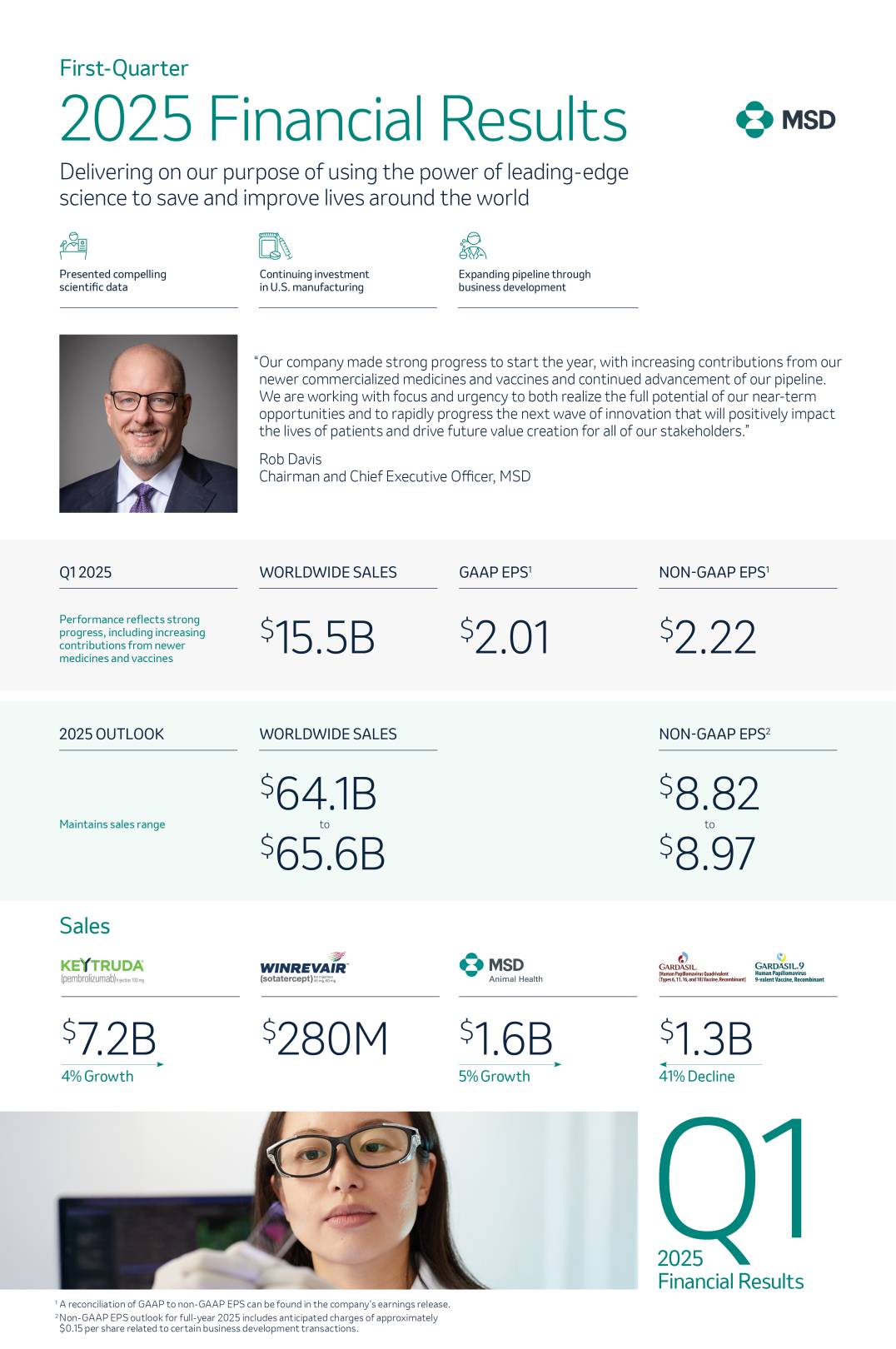
MSD’s Q1 2025 results reflect strong progress, including increasing contributions from newer medicines and vaccines. Our company announced Q1 worldwide sales of $15.5 billion.
”Our company made strong progress to start the year, with increasing contributions from our newer commercialized medicines and vaccines and continued advancement of our pipeline,” said Rob Davis, chairman and chief executive officer. “We are working with focus and urgency to both realize the full potential of our near-term opportunities and to rapidly progress the next wave of innovation that will positively impact the lives of patients and drive future value creation for all of our stakeholders.”
MSD anticipates full-year 2025 worldwide sales to be between $64.1 billion and $65.6 billion.
Take a look at the infographic below for more details on Q1 2025 results.
Our researchers incorporate LLMs to accelerate drug discovery and development
What are artificial intelligence (AI) agents? They're intelligent systems combining large language models (LLM), AI models and tools to iteratively plan, execute and optimize tasks
February 4, 2025
Share this article
Did you know that LLMs can be leveraged as master multitaskers? These LLM-based multitaskers, often called AI agents, can execute different tasks simultaneously. Having a team of high-performing AI assistants that can each play different roles ultimately helps researchers at MSD Research Labs (MRL) focus on critical drug discovery and development.
In today’s data-driven world, AI agents are emerging as a powerful tool for researchers and scientists to aid them in navigating the complexities of large data sets, refining hypotheses and executing both repetitive and differentiated tasks efficiently. Done manually, that kind of data gathering and analysis costs time and money.
MSD researchers use AI to augment human ability
A long-standing ambition for AI is to help find major scientific discoveries, learn on its own and acquire knowledge autonomously. This is what some call an “AI scientist.” While this concept is aspirational, advances in agent-based AI can help pave the way for the development of AI agents as conversable systems capable of reflective learning and reasoning that coordinate LLMs, machine learning (ML) tools, or even combinations of them.
Rather than taking humans out of the discovery process, AI can augment human ability to break down a problem into manageable subtasks, which can then be addressed by AI agents with specialized functions for targeted problem solving and integration of scientific knowledge. One significant advantage of these collaborative systems is their capacity for automation. Repetitive tasks, such as data cleaning or preliminary analysis, can be handled by AI agents, freeing our scientists to focus on higher level work and strategic decision making.
Agents help capitalize on MSD’s long-standing investments in AI/ML by rapidly accelerating the speed of our human researchers at scale.
Advance your data science career with us
We’re looking for scientists and technologists who are passionate about making a difference for patients.
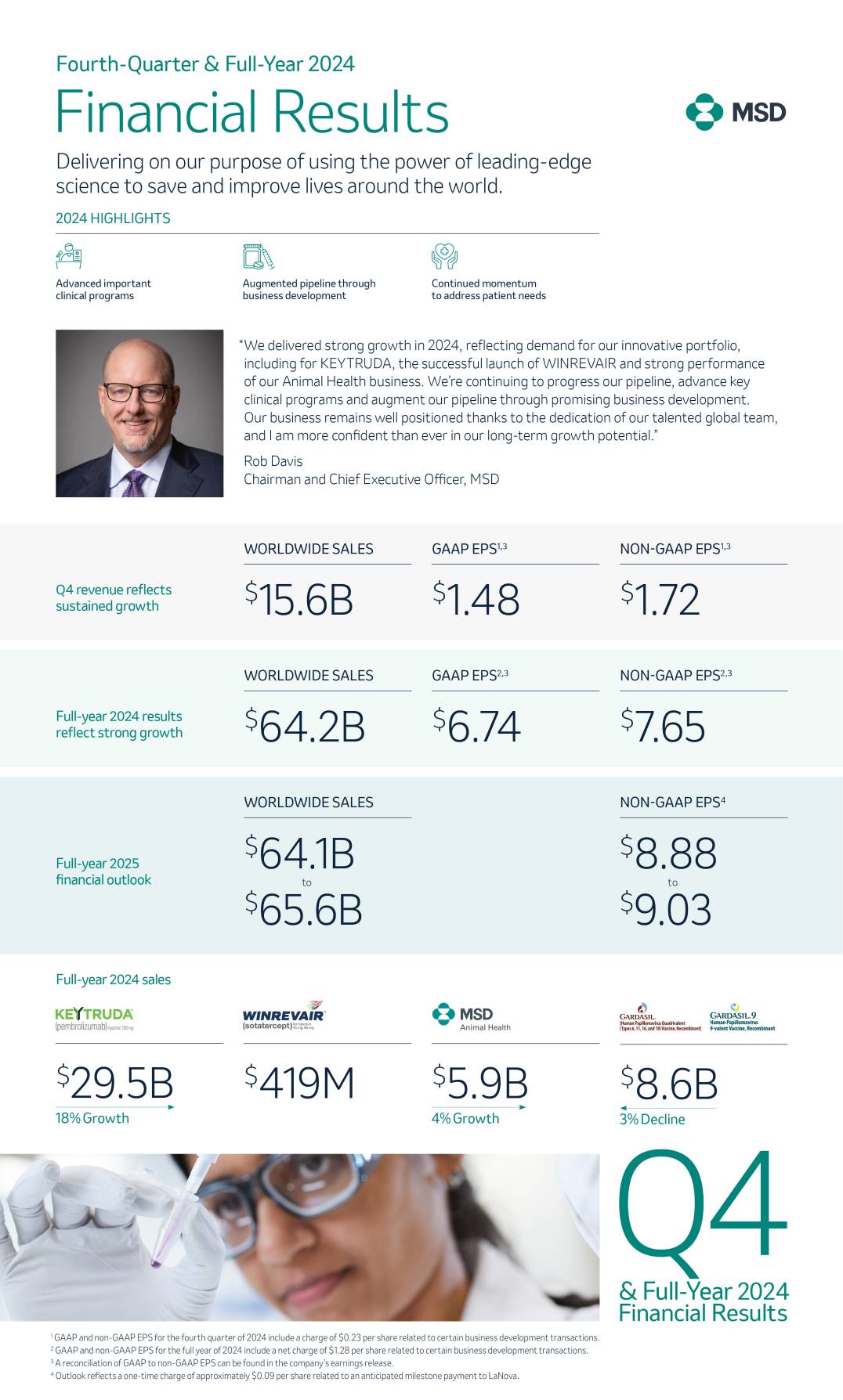
MSD’s Q4 and full-year 2024 results reflect strong growth. Our company announced Q4 worldwide sales of $15.6 billion, an increase of 7% from Q4 2023. Full-year 2024 worldwide sales were $64.2 billion, an increase of 7% from full-year 2023.
“We delivered strong growth in 2024, reflecting demand for our innovative portfolio, including for KEYTRUDA, the successful launch of WINREVAIR and strong performance of our Animal Health business,” said Rob Davis, chairman and chief executive officer. “We’re continuing to progress our pipeline, advance key clinical programs and augment our pipeline through promising business development. Our business remains well positioned thanks to the dedication of our talented global team, and I am more confident than ever in our long-term growth potential.”
MSD anticipates full-year 2025 worldwide sales to be between $64.1 billion and $65.6 billion.
Take a look at the infographic below for more details on Q4 and full-year 2024 results.
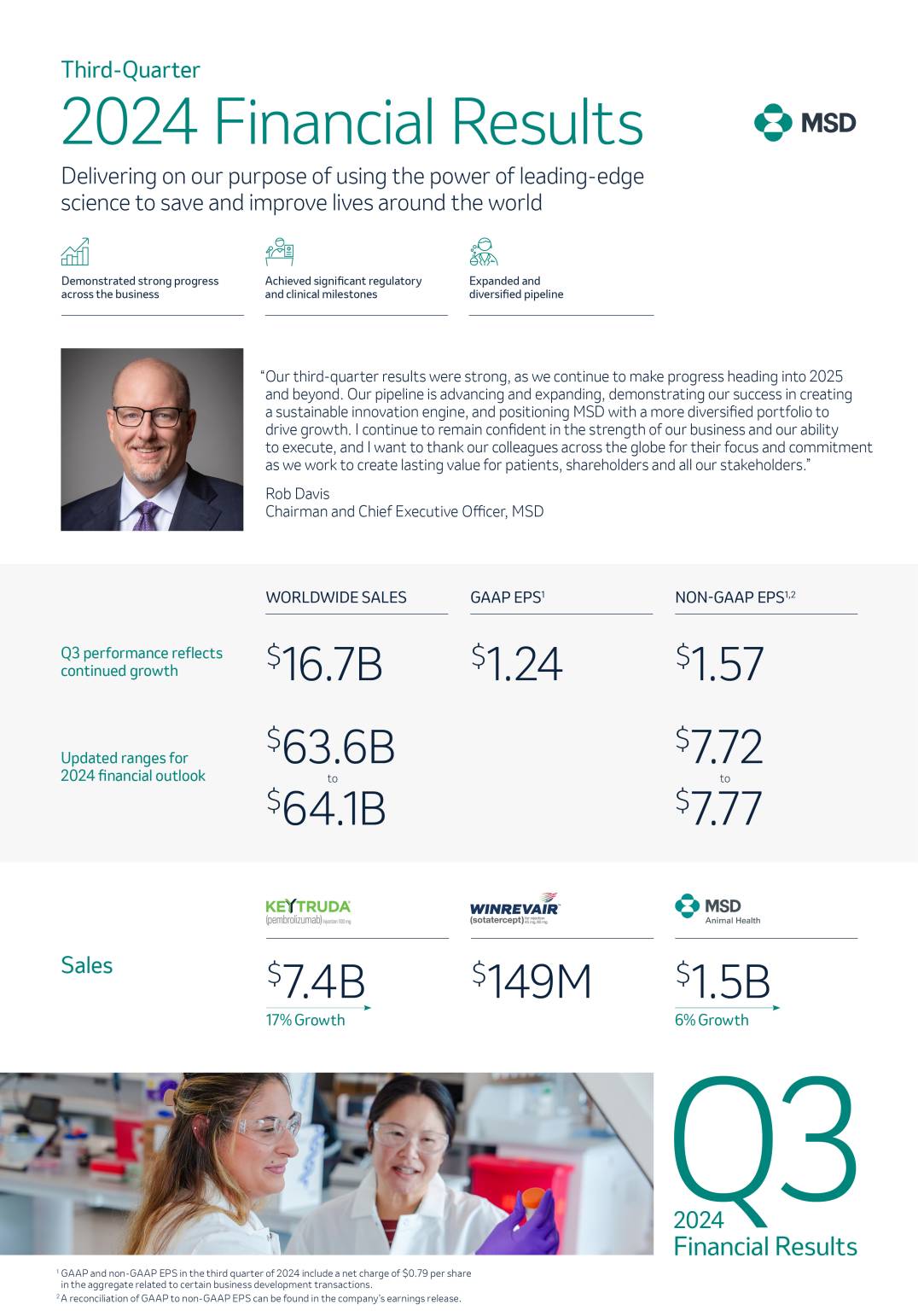
MSD’s Q3 2024 financial results represent strong progress across the business and our diverse pipeline. Our company announced worldwide sales of $16.7 billion, an increase of 4% from Q3 2023.
“Our third-quarter results were strong, as we continue to make progress heading into 2025 and beyond,” said Rob Davis, chairman and chief executive officer. “Our pipeline is advancing and expanding, demonstrating our success in creating a sustainable innovation engine, and positioning MSD with a more diversified portfolio to drive growth. I continue to remain confident in the strength of our business and our ability to execute, and I want to thank our colleagues across the globe for their focus and commitment as we work to create lasting value for patients, shareholders and all our stakeholders.”
MSD anticipates full-year 2024 worldwide sales to be between $63.6 billion and $64.1 billion.
TL1A: Exploring a potentially important target for inflammatory bowel disease
Our scientists are investigating ways to modulate TL1A to potentially address inflammation and fibrosis associated with inflammatory bowel disease
October 9, 2024
Share this article
Picture the immune system as a carefully orchestrated network of organs, cells and molecules working together to protect your body from foreign invaders. Normally, this system operates smoothly, identifying and then fighting off microbes. However, in the case of inflammatory bowel disease (IBD), a person’s immune system can mistakenly attack their own tissues, causing chronic inflammation and tissue damage.
Approximately 10 million people live with IBD worldwide, the two most common forms being Crohn’s disease and ulcerative colitis. Patients with IBD experience symptoms such as diarrhea, blood in the stool, abdominal pain, unintended weight loss, fatigue and impaired sleep. In 25-40% of patients, IBD may affect organs and tissues outside of the gastrointestinal system, including the joints, skin, bones, eyes, kidneys and liver. When IBD is uncontrolled, it can lead to hospitalizations and surgery.
Despite available therapies which have helped improve patients’ symptoms over the last two decades, many patients do not achieve a state of sustained remission.
“People with IBD often struggle to find a treatment that works for them because each individual’s disease is different,” said Aileen Pangan, vice president and therapeutic area head, immunology clinical research, MSD Research Laboratories.
“With a better understanding of the biology of IBD, medicines have begun to emerge that aim to change the way we approach treatment. We’re investigating ways to modulate targets, including TL1A, that have been implicated in IBD and other immune-mediated inflammatory diseases.”
Aileen Pangan
Our TL1A research
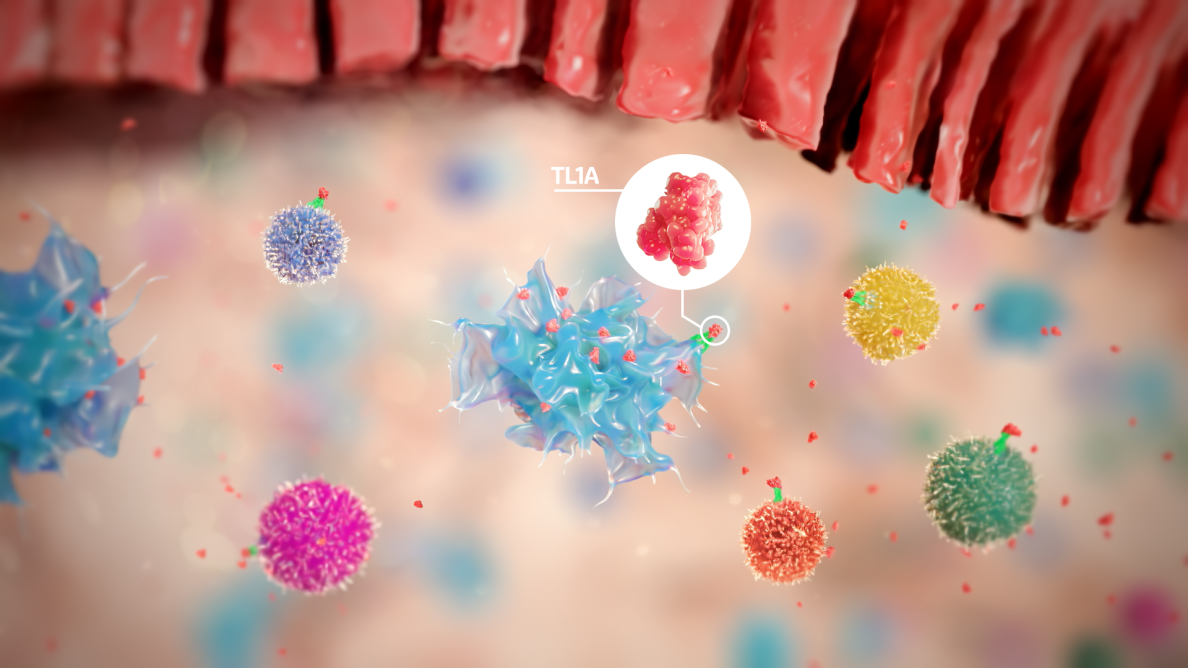
Our scientists are investigating tumor necrosis factor-like ligand 1A (TL1A), which has been shown to be increased in inflamed intestinal tissue and in the systemic circulation of patients with IBD.
TL1A is a cytokine, a protein functioning as a chemical messenger, that acts as a regulator of cellular immunity. In healthy people, levels of TL1A increase to help immune cells fight infections effectively, with levels going back down after the infection is gone. However, in IBD, TL1A levels are chronically elevated, leading to an excessive buildup of immune cells in the digestive tract, chronic inflammation, tissue damage and fibrosis.
Teams at MSD are evaluating the potential role of TL1A across immune-mediated inflammatory diseases, including Crohn’s disease, ulcerative colitis and systemic sclerosis-associated interstitial lung disease (SSc-ILD). Learn more about our research in immunology.
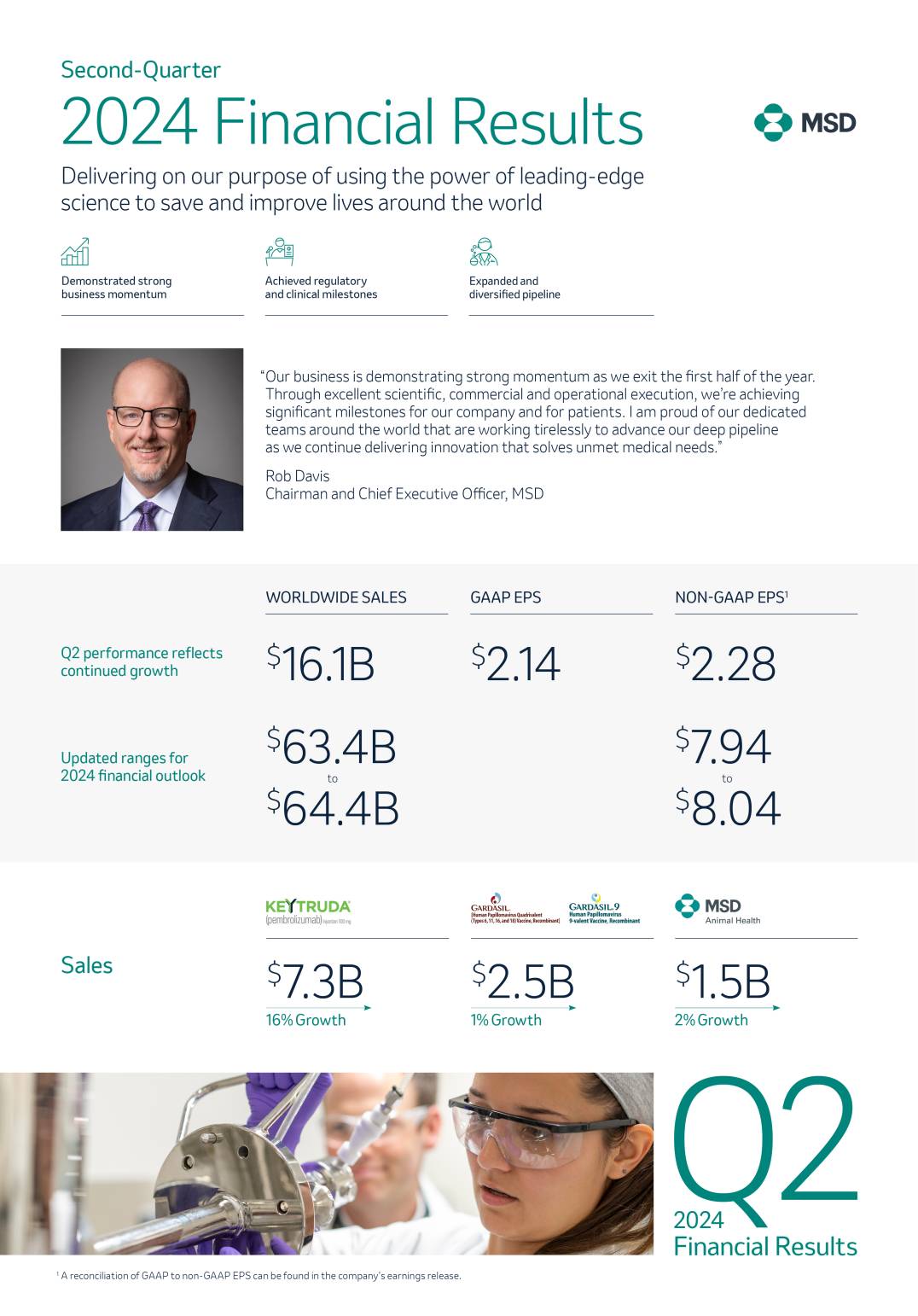
MSD’s Q2 2024 results demonstrate strong business momentum and further progress in our diverse pipeline. Our company announced worldwide sales of $16.1 billion, an increase of 7% from Q2 2023.
“Our business is demonstrating strong momentum as we exit the first half of the year,” said Rob Davis, chairman and chief executive officer. “Through excellent scientific, commercial and operational execution, we’re achieving significant milestones for our company and for patients. I am proud of our dedicated teams around the world that are working tirelessly to advance our deep pipeline as we continue delivering innovation that solves unmet medical needs.”
MSD anticipates full-year 2024 worldwide sales to be between $63.4 billion and $64.4 billion.
Dr. Maurice Hilleman was among pioneering scientists who made strides in vaccine history and the fight against infectious disease
May 8, 2024
Share this article
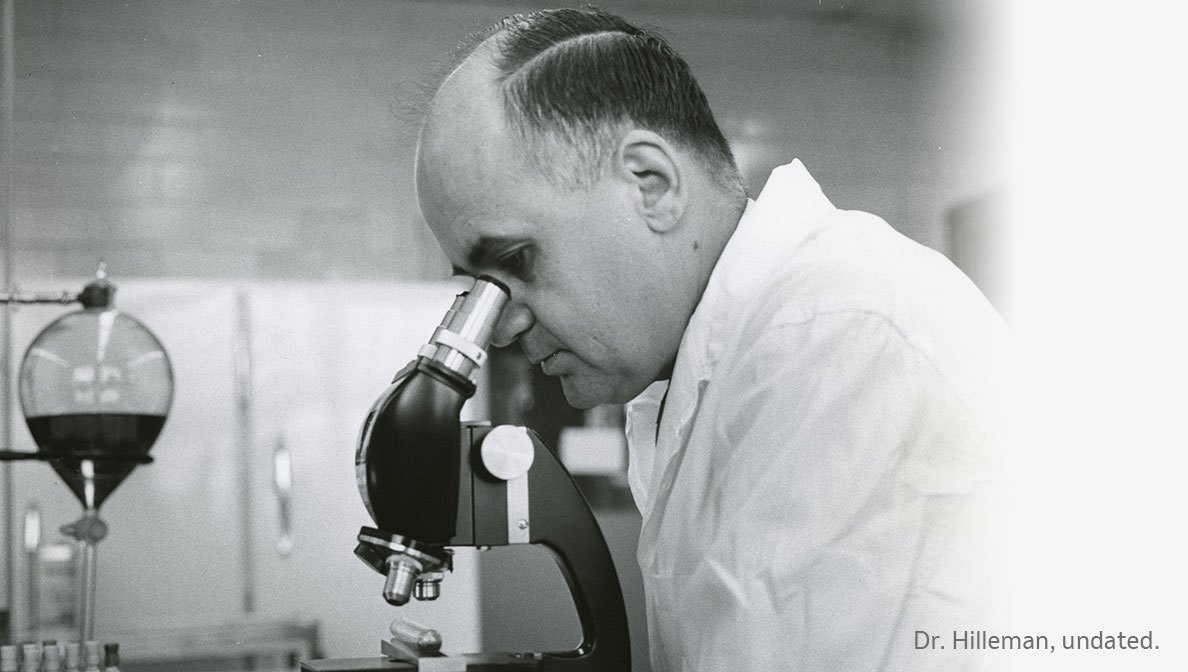
Dr. Maurice Hilleman, who led our department of virus and cell biology from 1957 to 1984.
When were vaccines invented?
The story of modern day vaccines began in 1796 when Dr. Edward Jenner inoculated 9-year-old James Phipps with cowpox as a way to protect him from smallpox. The term ‘vaccine’ is later coined, taken from the Latin word for cow, vacca. Smallpox was the first disease people tried to prevent by intentionally inoculating themselves with infected matter.
Dr. Edward Jenner inoculating 9-year-old James Phipps with cowpox.
Eight decades after Jenner published his findings, Louis Pasteur developed the first live attenuated rabies vaccine. Attenuation is a process that weakens the bacteria or virus in a vaccine so it’s less likely to cause disease, while still triggering an immune response similar to the natural infection. During the mid- to late-20th century, advances in basic and clinical research made it possible for scientists to develop vaccines to help protect against both bacterial and viral diseases.
Dr. Maurice Hilleman’s contribution to vaccine development
The names Jonas Salk and Albert Sabin have become synonymous with their inventions and developments around the polio vaccine, and the giant strides they made in the fight against viral diseases. Although these are some of the most famous names in vaccine research, MSD has a legacy of vaccine pioneers, too. Dr. Maurice Hilleman, who led MSD’s department of virus and cell biology from 1957 to 1984, also belonged to that distinguished group. Credited with helping to develop more than 40 experimental and licensed human and animal vaccines, Hilleman’s passionate commitment continues to inspire scientists in medical research laboratories to this day.
Hilleman was born and raised on a farm in Montana. It was a hard life, but a farm background was a great foundation for his later work.
“When you’re brought up on a farm, you have a lot of general knowledge,” he said. After graduating from the University of Chicago with a doctorate in microbiology and chemistry, Hilleman chose to work at a pharmaceutical company instead of academia.
Despite his many accomplishments, including helping to develop more than 40 human and animal vaccines, Hilleman’s name is virtually unknown by the general public and press. Yet his impact on public health is undeniable.
“His commitment was to make something useful and convert it to clinical use. Maurice’s genius was in developing vaccines, reliably reproducing them, and he was in charge of all pharmaceutical facets from research to the marketplace.”
Dr. Paul Offit Director of the Vaccine Education Center, professor of pediatrics in the Division of Infectious Diseases at Children’s Hospital of Philadelphia, and Hilleman’s biographer
In 1988, President Ronald Reagan awarded Hilleman the National Medal of Science, and in 1997, he was honored with the Albert B. Sabin Gold Medal Award. Dr. Anthony Fauci, former director of the National Institute of Allergy and Infectious Diseases at the National Institutes of Health, called Hilleman “one of the true giants of science, medicine and public health in the 20th century.”
Forward-Looking Statement of Merck & Co., Inc., Rahway, N.J., USA
This website of Merck & Co., Inc., Rahway, N.J., USA (the “company”) includes “forward-looking statements” within the meaning of the safe harbor provisions of the U.S. Private Securities Litigation Reform Act of 1995. These statements are based upon the current beliefs and expectations of the company’s management and are subject to significant risks and uncertainties. There can be no guarantees with respect to pipeline candidates that the candidates will receive the necessary regulatory approvals or that they will prove to be commercially successful. If underlying assumptions prove inaccurate or risks or uncertainties materialize, actual results may differ materially from those set forth in the forward-looking statements.
Risks and uncertainties include but are not limited to, general industry conditions and competition; general economic factors, including interest rate and currency exchange rate fluctuations; the impact of pharmaceutical industry regulation and health care legislation in the United States and internationally; global trends toward health care cost containment; technological advances, new products and patents attained by competitors; challenges inherent in new product development, including obtaining regulatory approval; the company’s ability to accurately predict future market conditions; manufacturing difficulties or delays; financial instability of international economies and sovereign risk; dependence on the effectiveness of the company’s patents and other protections for innovative products; and the exposure to litigation, including patent litigation, and/or regulatory actions.
The company undertakes no obligation to publicly update any forward-looking statement, whether as a result of new information, future events or otherwise. Additional factors that could cause results to differ materially from those described in the forward-looking statements can be found in the company’s Annual Report on Form 10-K for the year ended December 31, 2025 and the company’s other filings with the Securities and Exchange Commission (SEC) available at the SEC’s Internet site (www.sec.gov).
No Duty to Update
The information contained in this website was current as of the date presented. The company assumes no duty to update the information to reflect subsequent developments. Consequently, the company will not update the information contained in the website and investors should not rely upon the information as current or accurate after the presentation date.