Innovation

Building trust and advancing inclusion: Our approach to clinical trials in Uganda

In Uganda, where women are disproportionately impacted by HIV, our community-based research prioritizes meeting patients where they are

November 24, 2025

Share this article

Facebook icon

.st0{fill:#00857C;} X icon

Linkedin icon

Email icon

Rebeca Plank, M.D., Ph.D. (right) and Joan Nabawanuka, community liaison officer at MU-JHU Care Ltd., meet with Kibuuka Yahaya Galabuzi, local leader of Katiko Fishing Village in the Mityana district

In sub-Saharan Africa, young women are three times more likely than young men to be living with HIV. Now, MSD researchers are part of a coalition of community leaders, academic organizations and NGOs working in Uganda to help ensure that clinical trials for investigational HIV medicines are designed to address this disparity — and to reflect real-world challenges in local communities. By focusing on local voices and expertise, the coalition aims to build trust, improve trial design, address barriers to study participation and engage directly with the community.

To learn more about how these efforts have shaped our HIV clinical trials in Uganda, we chatted with two members of our on-the-ground research team: Ian Bradley-Perrin, Ph.D., and Rebeca Plank, M.D., MPH.

Why is inclusion important in HIV clinical trials?

Plank: People may respond differently to the same medicine based on factors like age, gender, weight or ethnicity. By prioritizing inclusivity in HIV clinical trials, our goal is to develop treatment and prevention options that work for all people affected by HIV.

SEE ALSO: Dr. Plank shares her motivations and hopes for the future of HIV research

Why is it important to include women in HIV clinical research, especially in countries like Uganda?

Bradley-Perrin: Cultural expectations, gender roles and the still-too-common stigma surrounding HIV and sexual health can make it difficult for women in Uganda to take part in HIV prevention trials. Historically, women’s underrepresentation in these prevention clinical trials limited our field’s understanding of how these medicines work specifically for them.

Plank: We’ve made an effort to expand our HIV prevention clinical trials to include pregnant and breastfeeding women because there are limited late-stage data and safety information in those populations. So, it’s important to move in that direction of greater inclusivity in our trials with the goal of driving the research and development of investigational medications to make sure there are options women can access regardless of their plans for pregnancy. Today, many health care providers may be reluctant to prescribe medicines that have not been studied in pregnant and/or lactating women, and pregnant and/or lactating women may be reluctant to take these medicines.

What’s the role of local communities in HIV prevention clinical trials?

Bradley-Perrin: We’ve learned that strong collaboration is essential — and it’s been a real two-way learning process. Partners like the University of Washington’s International Clinical Research Center bring long standing experience running clinical trials in sub-Saharan Africa, and the Gates Foundation is providing strategic partnership and financial support for the operational needs of each clinical research site, including things like experienced research staff, upgraded facilities, and help building new clinics. Equally important is the Global Community Advisory Group: HIV prevention advocates with a country and global perspective who give critical input on trial design, recruitment materials and will advise on study operations throughout the trial. They give us honest feedback about community concerns and help keep us accountable and connected to people’s real lives and priorities.

For example, in Mityana, a rural district west of Kampala, our team collaborated with community leaders to support a local engagement strategy that helped identify locations where women have historically had trouble accessing HIV clinical trials, like fishing villages and gold mining communities.

Plank: By going out to a gold mine that was two hours from the clinic, I better understood the complexities of reaching this community, especially over the duration of a multi-year clinical trial. Transportation was a huge barrier that needed to be addressed to make sure women wouldn’t be hindered from participating because of where they lived or their access to transportation.

What are some other ways MSD is supporting clinical trial participants?

Bradley-Perrin: Along with transportation, we prioritized support services such as child care and, when needed, home visits to help women participate in the trials.

Plank: Thanks to the Gates Foundation, ICRC and our other partners on the ground, the clinical trial team has trained local staff, updated facilities and even helped to construct new research clinics that could be used for new research projects. These practical solutions aim to increase trial participation in geographies that need innovations the most and help address some of the practical challenges participants face.


Resize icon Close icon
Previous
Next
  • Plank and Bradley-Perrin walk with Flavia Matovu Kiweewa, MBChB, Ph.D., principal investigator of MU-JHU Care Ltd.
  • Cyrus Badshah, M.D., Ph.D, MSD senior principal scientist and Joyce Matovu, site hospital liaison coordinator at MU-JHU Care Ltd., tour the Namulanda Mukikadde gold mine community in the Mityana district.
  • A view of Namulanda Mukikadde gold mine area in the Mityana district of Uganda, where innovative clinical trials for HIV are taking place.
  • Godfrey Ssaka, laboratory manager at MU-JHU Care Ltd., shows Susan Vaz, a clinical research manager at our company, around the lab.
  • MSD’s community-based research in Uganda prioritizes fostering trust and creating conditions to encourage inclusive trial participation.
Previous
Next
  • Plank and Bradley-Perrin walk with Flavia Matovu Kiweewa, MBChB, Ph.D., principal investigator of MU-JHU Care Ltd.
  • Cyrus Badshah, M.D., Ph.D, MSD senior principal scientist and Joyce Matovu, site hospital liaison coordinator at MU-JHU Care Ltd., tour the Namulanda Mukikadde gold mine community in the Mityana district.
  • A view of Namulanda Mukikadde gold mine area in the Mityana district of Uganda, where innovative clinical trials for HIV are taking place.
  • Godfrey Ssaka, laboratory manager at MU-JHU Care Ltd., shows Susan Vaz, a clinical research manager at our company, around the lab.
  • MSD’s community-based research in Uganda prioritizes fostering trust and creating conditions to encourage inclusive trial participation.
Patients

This red chair is a reminder that patients can’t wait

Colleagues rally around a red chair as a reminder to work urgently for the people who need lifesaving medicines and vaccines

November 18, 2025

Share this article

Facebook icon

.st0{fill:#00857C;} X icon

Linkedin icon

Email icon

When his close colleague’s father passed away in 2021, it was a stark reminder to Prashant Nikam: Patients can’t wait for lifesaving medicines and vaccines. Spurred by this loss, Nikam and his colleagues in Australia and New Zealand created a visual reminder of the people we’re working for: They put a red chair in their meeting room and asked, “What if the patient was sitting right here with us?” 

“Every day, someone’s relying on us. We need to make sure we’re doing everything possible so they can have access to our products in a timely manner.”

  • Prashant Nikam
    Managing director, Japan

“When we see that red chair in our workspace, when we envision that patient being in the room listening to us, we make decisions that are truly focused on doing what’s best for them,” said Nikam, now managing director, Japan.

The red chair: an urgent reminder to elevate the patient voice 

What started as a simple but powerful concept in Australia and New Zealand has now grown into a rallying cry at our sites around the world, due in part to support from Linda Kollmar, AVP of our patient innovation and engagement team. 

“People are urgently waiting for us to get our drugs and vaccines approved where they live, for access, for a prescription,” said Kollmar. “So, it’s more than just a red chair; it’s a mindset. And it transforms the way we work to ensure we’re keeping patients front and center.”  

The initiative now spans more than 40 of our global locations, where colleagues across the company have placed a chair representing the patient in boardrooms, conference rooms, labs, cafeterias and other workspaces.  

“When I’m thinking about a decision I’m making or work I’m doing, I think, ‘What if the patient was sitting right next to me? What would they be thinking and how would they want me to work with urgency for them?’”

  • Linda Kollmar
    AVP, patient innovation and engagement
image of a red chair with a soft light shining on it

It’s an initiative that complements the work of her team, which engages with patients, patient advocates and communities to learn more about their perspectives, challenges and needs. The team brings that patient voice into the work we do — from discovery and clinical development to manufacturing and beyond. The chair is an additional, physical reminder to always think of the patient. 

A growing grassroots effort inspires new ways to put patients first

a collage of red chairs in many different office locations, such as lab, conference room, lobby, workspace, etc.

“As we started spreading the word about the red chair and hearing success stories from different teams, we realized that this is really a movement at a grassroots level that people can embrace to inspire them to put patients first,” Nikam said.

One of those first success stories came from the market access team in Australia, who wanted to help speed up the long approval process for a new medicine.

“Envisioning the patient in the room with them, the team brainstormed ways to highlight the urgency of the situation. They decided that in addition to bringing the safety, efficacy and economic data into their health technology assessment submissions, they would also bring the patient voice to the health authorities,” said Nikam. “So, they collected patient commentaries — inspiring and emotional stories of what it means to be a patient and without timely access to innovative medicines — and included these with our new submissions. These patient stories were overwhelmingly powerful firsthand accounts that authorities couldn’t ignore.”

A history and a future of putting patients first

This longstanding commitment to patients can be traced back to our company’s beginnings more than 130 years ago. In 1925, then-president George W. Merck said, “We try never to forget that medicine is for the people. It is not for the profits.”

That ethos continues to inspire us today. The red chair is one way we maintain our focus, but it’s a sentiment that’s important for all who serve patients to embrace.

“It’s not just for us. It’s bigger than us,” said Kollmar. “I would love to see more red chairs representing patients all over the globe. That would be incredible.”

Health awareness

Understanding the health risks of high LDL cholesterol

Our scientists are investigating a potential new approach to reduce low-density lipoprotein (LDL) cholesterol in order to help lower the risk of heart attacks and strokes

October 31, 2025

Share this article

Facebook icon

.st0{fill:#00857C;} X icon

Linkedin icon

Email icon

colorful molecules

What does high cholesterol mean?

Cholesterol is obtained from food and produced by the liver. It carries out several important functions in our body, including the synthesis of new cells, some hormones and substances that help digest food. There are two kinds of cholesterol: high-density lipids (HDL) and low-density lipids (LDL). Too much LDL cholesterol can pose a problem.

LDL-C, also known as “bad cholesterol,” is known to combine with fats and other substances leading to the buildup over time of fatty deposits, known as atherosclerotic plaques, on and within the inner walls of arteries. This may increase an individual’s risk of heart attack or stroke. People with elevated LDL-C levels in their blood have a condition called hypercholesterolemia.

Certain health conditions like type 2 diabetes and obesity, as well as behavior and lifestyle factors like smoking, eating a diet high in saturated and trans fats and lack of exercise, have been shown to increase a person’s risk for hypercholesterolemia. Other factors that increase risk include a family history of cardiovascular disease, older age and gender (women tend to have lower LDL levels than men until ~55 years of age or until menopause).

SEE ONE PATIENT’S JOURNEY: A call to action: Lowering LDL cholesterol

Hypercholesterolemia: a major causal risk factor for cardiovascular disease

Hypercholesterolemia is a leading contributor to atherosclerotic cardiovascular disease (ASCVD), a condition caused by the buildup of plaque within arteries, leading to narrowed or blocked blood vessels. This may result in cardiovascular events such as heart attack or stroke and continues to pose a significant health burden.

The CV epidemic

~24.1%

Adults live with hypercholesterolemia

~500M

People worldwide are affected by cardiovascular disease

~20.5M

Deaths from cardiovascular disease in 2021

Despite widespread availability of therapeutic interventions, 70% of the patients treated with lipid-lowering therapies are not achieving guideline recommended reductions in LDL cholesterol and, as a result, remain at risk for serious cardiovascular events.

“Millions of people are impacted by hypercholesterolemia and struggle to meet their recommended LDL cholesterol level,” said Dr. Puja Banka, associate vice president, clinical research and global clinical development.

“Cardiovascular disease is a serious global public health threat, and we’re investigating an established biological mechanism coupled with the potential of an innovative modality to help support patients who continue to have high LDL cholesterol levels.”

  • Dr. Puja Banka

Our PCSK9 research

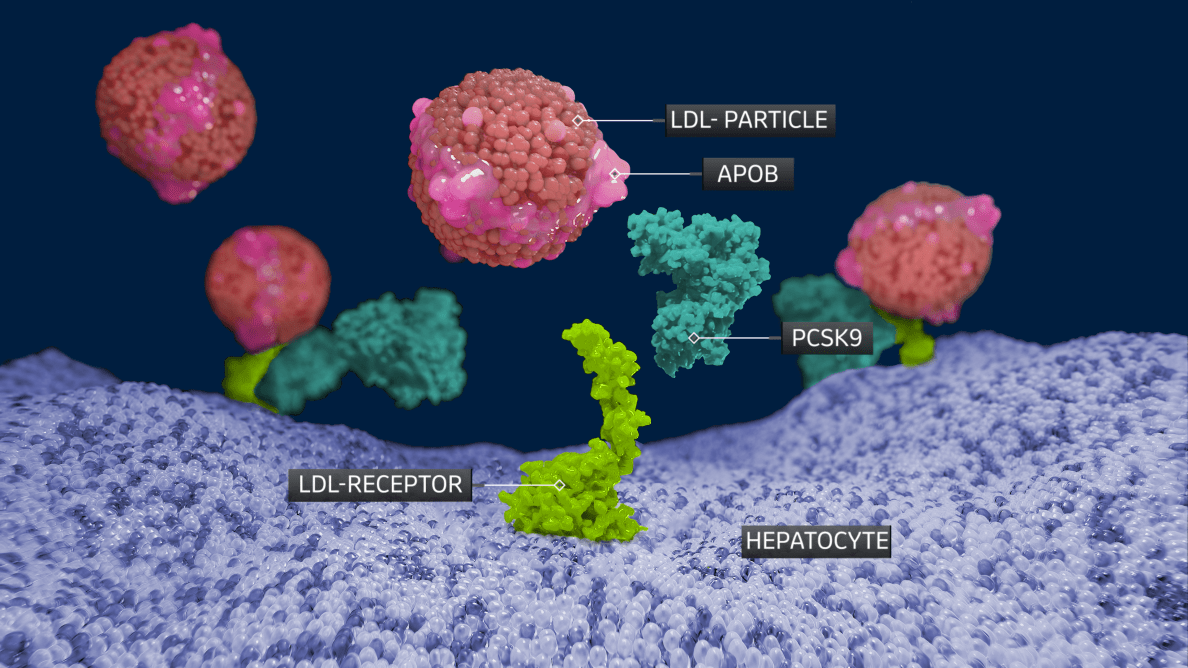
Over two decades ago, researchers identified the connection between proprotein convertase subtilisin/kexin type 9 (PCSK9) and cholesterol when a genetic mutation in the PCSK9 gene was observed in a family with familial hypercholesterolemia. PCSK9 plays a role in controlling the level of LDL-C in the blood by regulating the number of LDL receptors on the surface of cells, which are responsible for the binding and removing of cholesterol from the blood stream.

Today, MSD scientists are building on these findings to research different ways to target PCSK9 as a potential approach to help reduce LDL-C levels in the blood.

“For nearly 70 years, our company has been developing medicines to help address the burden of cardiovascular disease,” said Banka. “And we’re combining our deep expertise in cardiovascular disease and our strong medicinal chemistry capabilities to help advance PCSK9 research.”

Learn more about our commitment to cardiovascular health.

Innovation

Our Q3 2025 financial results

October 30, 2025

Share this article

Facebook icon

.st0{fill:#00857C;} X icon

Linkedin icon

Email icon

scientists in lab

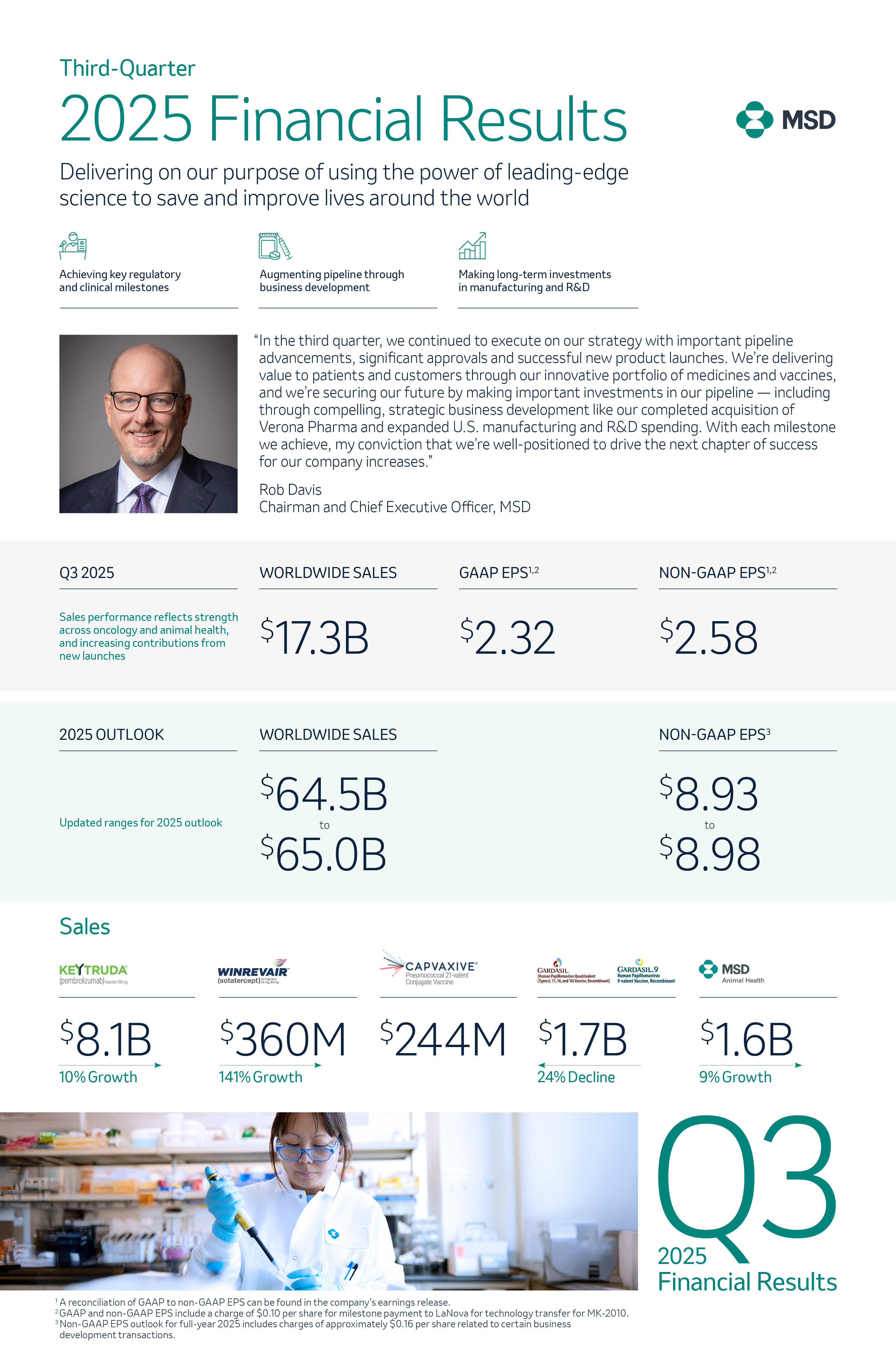
MSD’s Q3 2025 sales performance reflects strength across oncology and animal health, as well as increasing contributions from new launches. Our company announced Q3 worldwide sales of $17.3 billion.​

“In the third quarter, we continued to execute on our strategy with important pipeline advancements, significant approvals and successful new product launches,” said Rob Davis, chairman and CEO. “We’re delivering value to patients and customers through our innovative portfolio of medicines and vaccines, and we’re securing our future by making important investments in our pipeline – including through compelling, strategic business development like our completed acquisition of Verona Pharma and expanded U.S. manufacturing and R&D spending. With each milestone we achieve, my conviction that we’re well-positioned to drive the next chapter of success for our company increases.”​

​MSD anticipates full-year 2025 worldwide sales to be between $64.5 billion and $65.0 billion.​

​Take a look at the infographic below for more details on Q3 2025 results.

Q3 2025 Earnings Infographic

Download infographic

Patients

More treatment options mean more flexibility for people with cancer

Additional treatment options can help patients make time for their health and their priorities

October 28, 2025

Share this article

Facebook icon

.st0{fill:#00857C;} X icon

Linkedin icon

Email icon

young woman standing in the kitchen with her arm around an older woman and a man standing and smiling

Every person diagnosed with cancer is unique. That’s why it’s so important for patients to have more treatment options, including ones that for some patients could be given in different care settings that are closer to home. This may give them flexibility and potentially allows them to have more time to care for their health.

Understand cancer treatment options

Advances in cancer treatment are happening every day and therapeutic options are continuously expanding. The right cancer treatment for a given patient depends on many factors including the type of cancer they have, the stage of their cancer and their overall health. Some common options include:

  • Radiation therapy
  • Chemotherapy
  • Hormone therapy
  • Targeted therapy
  • Immunotherapy
  • Surgery

Each of these types of cancer treatment work in a unique way to help treat the disease. Certain treatments also can be delivered in different ways, including but not limited to:

  • Orally: Via a pill or something taken by mouth
  • Topically: Applied to the surface of the skin
  • Intravenously: Administered through a needle or tube inserted into a vein (also called an infusion, when the medication is delivered over a specified period of time)
  • Subcutaneous injection: Via a needle inserted directly into the fatty tissue layer between the skin and muscle — or right under your skin

As additional treatment options become available, patients and caregivers are more likely to be able to consider which treatment option works best for their condition, lifestyle and preferences.

Researchers are exploring how to make treatment more flexible

Traditionally, some therapies have been administered only in hospitals and infusion clinics, often requiring patients to travel for their care, which can be time-consuming and burdensome. Once patients arrive, there are multiple steps health care providers must take in preparing for and administering treatment and observing the patient afterwards. A treatment day can be long when you consider the time from when patients leave their homes to the time they return from treatment.

Recent research has led to options that may allow for treatment to be administered subcutaneously rather than intravenously, making it possible for patients to receive treatment in more health care settings such as a doctor’s office or a community-based care center. With more choices available, patients have options that may allow them to personalize their treatment approach based on their specific lifestyle needs, so they can focus on other things that matter to them. These options may also provide additional flexibility and time savings for health care providers and systems.

“Time is one of the most valuable resources we all have, and at MSD we believe in prioritizing health so we can embrace every moment.”

  • Dr. M. Catherine Pietanza
    Vice president of global clinical development, MSD

“Cancer is not a one-size-fits-all disease, so it’s important that health care providers are able to offer treatment options that allow patients more flexibility,” said Pietanza.

Make time for your health — and the other parts of your life, too

Roz Faulhaber, a school counselor who had colorectal cancer, discovered firsthand the challenges of finding enough hours in the day to make time for everything following a cancer diagnosis.

“Receiving cancer treatment while trying to maintain a sense of normalcy in my life has been very challenging at times. I commute several hours to my treatment center and once I get there, the treatment itself can take hours. I want to spend more of my day with my grandchildren or relaxing at our beach home,” said Faulhaber.

“Discussing my treatment options with my doctor has been crucial — they’ve helped me select a care plan that best meets my needs, and we continue to discuss options that could give me time back in my day and flexibility.”

  • Roz Faulhaber

Patients should talk to their health care provider about treatment options, including methods of administration and dosing schedules, that fit their needs and may provide them with more flexibility

Learn about our oncology research.

Health awareness

From awareness to action: understanding triple negative breast cancer (TNBC)

Early detection is important for this aggressive type of breast cancer. Learn more about the risk factors, signs and symptoms of TNBC.

October 28, 2025

Share this article

Facebook icon

.st0{fill:#00857C;} X icon

Linkedin icon

Email icon

Three women sitting on couch

There are many different types and subtypes of breast cancer — defined by where it starts in the breast, how much it has grown or spread and how it behaves. One of the more aggressive and difficult-to-treat types is triple-negative breast cancer (TNBC), and knowing the facts is one of the most important steps in a patient’s cancer journey.

What is TNBC?

Breast cancer tumors may be tested for three receptors, or proteins, that make cancer grow. A TNBC diagnosis is made when the tumor tests negative for estrogen and progesterone receptors and does not over express HER2.

TNBC differs from other types of invasive breast cancer, as it tends to grow and spread faster, with a worse prognosis for patients. It also has a high likelihood of recurrence.

Who’s at risk of developing TNBC?

While TNBC can affect anyone, some people may be at higher risk. Factors that make someone more likely to be diagnosed with TNBC include:

  • Sex: People assigned female at birth are at higher risk for TNBC compared to people assigned male at birth
  • Race/ethnicity: TNBC disproportionately impacts Black women
  • Age: TNBC is more common in women younger than 40
  • Genetic mutations: Mutations in certain genes are associated with TNBC

What are the signs and symptoms of TNBC?

TNBC may have the same signs and symptoms as other common types of breast cancer, though most breast cancers are detected before symptoms appear through regular screenings.

Possible signs and symptoms of breast cancer may include:

  • A new breast lump or mass
  • Swelling of all or part of a breast
  • Skin dimpling
  • Breast or nipple pain
  • Nipple retraction
  • Nipple or breast skin that’s red, dry, flaking or thickened
  • Nipple discharge
  • Swollen lymph nodes, under the arm or near the collar bone

Our commitment to access to health

Navigating breast cancer, especially aggressive types like TNBC, can be daunting and for some — overwhelming. However, access to information and the right tools and resources can contribute to a more equitable patient journey for those impacted. By equipping patients to make better informed decisions, we can help them to advocate and determine the best path forward.

Josette Gbemudu headshot

Early detection of breast cancer isn’t just important — it could be life-saving. That’s why we’re focused on helping women get the care they need.

— Josette Gbemudu

AVP, patient health innovation.

“We focus our work on making the most impact for patients — from advancing science to help patients living with this condition to creating patient-friendly education materials. We’re committed to the needs of people living with breast cancer, globally,” said Karen Lisa Smith, senior principal scientist.

Learn more about our commitment to expanding access to health.

Health awareness

A call to action: Lowering LDL cholesterol

See how a grandfather's heart attack sparked a journey toward lowering his LDL cholesterol level

October 28, 2025

Share this article

Facebook icon

.st0{fill:#00857C;} X icon

Linkedin icon

Email icon

“Life is short. It can change any second,” John Bald said he realized when his ski trip ended in the hospital.

While on the slopes several years ago, Bald, a father of three and grandfather of three, started to feel chest pain. What he thought was heartburn kept getting worse with each run.

“When I finally got to the hospital, I ran to the emergency window, and by the time I got to the window, I almost collapsed,” Bald said.

His doctors discovered he was having a heart attack. They found a 95% blockage of his right coronary artery, a common sign of atherosclerotic cardiovascular disease (ASCVD), and he later learned he had high levels of LDL cholesterol, also known as bad cholesterol.

The blockage was cleared, and Bald received a stent in his heart to keep his artery open and improve blood flow to the rest of his body. As someone who had been active and relatively healthy, he was surprised by his diagnosis.

What is atherosclerotic cardiovascular disease (ASCVD)?

ASCVD is a condition caused by the buildup of plaque (bad cholesterol, fats and other substances) within the arteries, leading to narrowed or blocked blood vessels that can result in serious cardiovascular events such as heart attacks or strokes. ASCVD includes diseases that can narrow or block arteries in your heart, legs, and/or brain.

The risks of high cholesterol

Bald learned his high LDL cholesterol put him at an increased risk of a future heart attack or stroke.

A high level of low-density lipoprotein cholesterol (LDL-C) is one of several risk factors that can contribute to the development of ASCVD. Plaques can silently build up in arteries over time, which may increase the risk of a heart attack or stroke.

John Bald in pool, child at poolside

Bald and his doctor came up with a treatment plan to manage his cholesterol. These conversations with his doctor, in addition to medication and lifestyle changes, helped Bald lower his risk of future cardiovascular events. It also prompted his adult family members to understand their own cardiovascular risk.

Today, Bald savors every minute splashing in the pool with his three grandchildren.

Watch above to learn more about John Bald’s journey to lowering his LDL cholesterol.

Health awareness

Helping protect against vaccine-preventable diseases

Vaccination is one of the many ways you can help protect your loved ones against certain vaccine-preventable diseases

October 10, 2025

Share this article

Facebook icon

.st0{fill:#00857C;} X icon

Linkedin icon

Email icon

Parent and child at breakfast

Vaccines are one of the greatest public health success stories in history

Vaccines help protect against more than 30 potentially life-threatening diseases and are one of the greatest public health achievements of our time.

We recognize and support many global health stakeholders for their efforts in raising awareness about the importance of vaccination and helping prevent infectious diseases around the world.

Broader vaccination coverage along with other public health measures have contributed to the eradication of smallpox and significantly decreased the incidence of other vaccine-preventable diseases.

Declining immunization rates persist

Childhood immunization rates have been declining in recent years, with the global population facing the largest sustained decline in approximately 30 years.

A downward trend in global immunization persists, with immunization coverage stalling in 2023, leaving 2.7 million more children un- or under-vaccinated compared to 2019.

doctor and children

In 2024, it’s estimated that more than 14.3 million infants around the world did not receive some routinely recommended vaccines.

Recovering immunization rates together

Now, more than ever, we have an opportunity to reimagine the role we all can play.

At MSD, our broad portfolio of vaccines helps protect against certain infectious diseases affecting individuals around the world and across all stages of life from infancy through older adulthood. Through our work in vaccines, we’re committed to helping protect people from vaccine-preventable diseases today and for generations to come.

But we can’t be successful alone. That’s why we’re working with a variety of stakeholders to help increase vaccination rates, build trust and enable access to vaccination services for everyone who can benefit from them.

We’re also encouraging individuals to speak with their health care providers about vaccines that may be recommended for them or their families.

MSD and its legacy companies have a 100+ history of innovation and commitment to helping prevent disease by discovering, developing, supplying and delivering vaccines.

To keep pace with the ever-evolving disease landscape, we go where the need is to find new ways to address complex public health problems. We continue to invest in groundbreaking research and breakthrough technologies to help protect against potentially life-altering vaccine-preventable diseases.

Innovation

Understanding vision-threatening retinal conditions: Diabetic macular edema and wet AMD

Our scientists are researching new ways to address vision-threatening retinal conditions like diabetic macular edema and wet age-related macular degeneration (wet AMD)

October 9, 2025

Share this article

Facebook icon

.st0{fill:#00857C;} X icon

Linkedin icon

Email icon

Retinal conditions such as diabetic macular edema (DME) and neovascular (wet) age-related macular degeneration (AMD) threaten the eyesight of millions worldwide. While anti-VEGF treatments have helped to improve outcomes, a significant number of patients – up to 40% – fail to respond or only partially respond.

“A diagnosis of diabetic macular edema or wet age-related macular degeneration can profoundly affect a patient’s quality of life,” said Dr. David Guyer, founder, chief executive officer and president at EyeBio, a wholly-owned subsidiary of Merck & Co., Inc., Rahway, N.J., USA, “The fear of progressive vision loss looms large, and beyond the physical challenges, many patients carry the emotional burden of worrying about their declining eyesight.”

To find alternatives for these patients, our scientists are investigating novel therapeutic targets for certain retinal conditions.

Our research exploring the Wnt signaling pathway

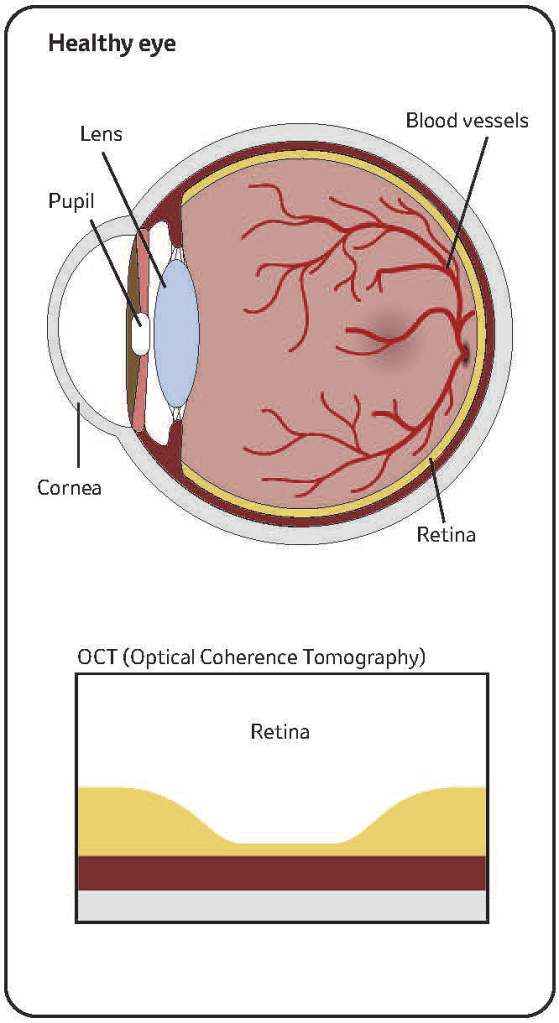
Our eyes have a blood-retinal barrier that protects our delicate retinal tissue. When the barrier is compromised, fluid can leak into the macula – the central part of the retina responsible for sharp, detailed vision – and other areas of the eye, causing swelling that can lead to vision loss for people living with DME and wet AMD.

Research suggests that changes in the Wnt (pronounced “wint”) pathway are associated with the breakdown of this blood-retinal barrier in DME and wet AMD. MSD and EyeBio scientists are exploring the Wnt pathway as a potential approach to help improve the integrity of the blood-retinal barrier.

“We hear from retinal physicians about the demand for novel approaches to treat serious retinal conditions like diabetic macular edema and wet AMD.”

  • Dr. Tony Adamis
    Chief scientific officer, EyeBio, a wholly-owned subsidiary of Merck & Co., Inc., Rahway, N.J., USA
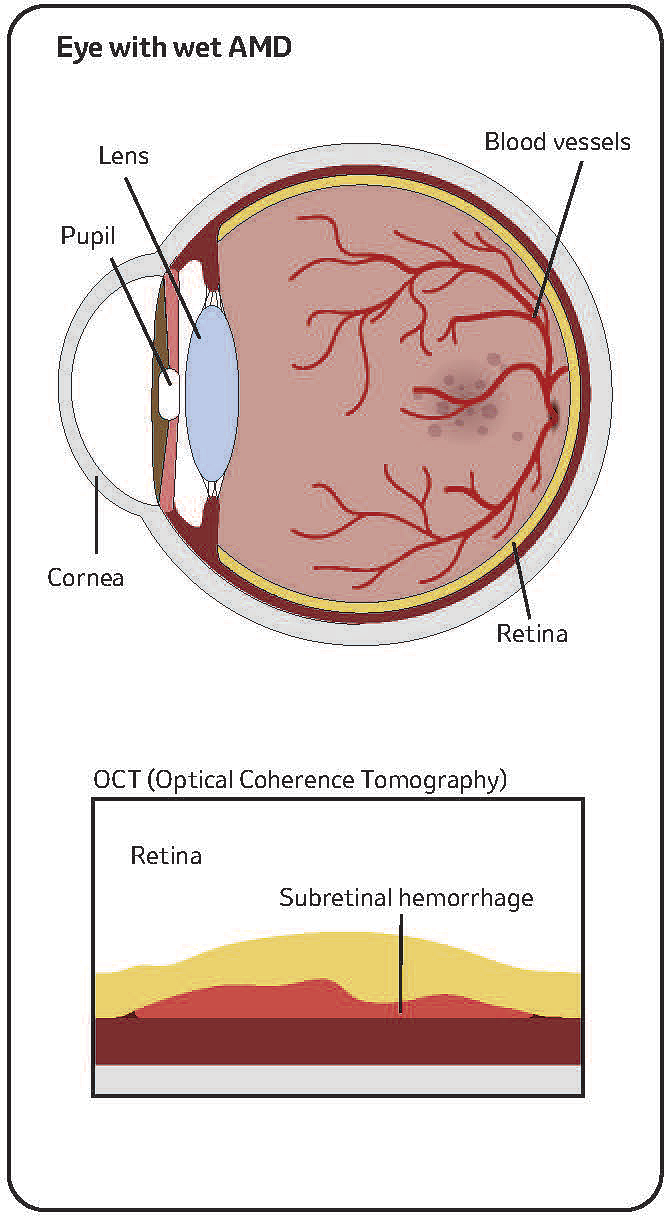
Illustration of healthy eye
Illustration of eye with DME
Illustration of eye with wet AMD

NOTE: These images are diagrammatic representations of the eye for illustrative purposes only.

What is diabetic macular edema (DME)?

Diabetic macular edema (DME) is serious eye condition that poses a risk to vision in people with diabetes:

  • DME is caused by excess fluid buildup in the retina and characterized by swelling and thickening of the macula due to fluid leakage from damaged blood vessels.
  • DME may be present in patients who are not experiencing visual symptoms, at times delaying a definitive diagnosis.

What is wet age macular degeneration (wet AMD)?

Wet AMD is the most frequent cause of vision loss in older adults, caused by the growth of abnormal blood vessels under the retina.

  • Current therapies are limited to slowing or reducing AMD-associated vision loss.

Through research, our scientists hope to improve vascular stability and reduce fluid leakage. We are working to potentially redefine the treatment of certain retinal conditions to help patients worldwide.

Learn more about our research and commitment to ophthalmic health.

Health awareness

Debunking 6 common myths about pneumonia in adults

Don't underestimate the severity of this infection of the lungs

October 7, 2025

Share this article

Facebook icon

.st0{fill:#00857C;} X icon

Linkedin icon

Email icon

senior couple making medical appointment

What is pneumonia?

Pneumonia is an infection of one or both lungs that can make it difficult to breathe and limit your ability to get enough oxygen.

Some common myths about pneumonia in adults, explained:

01.

Myth: Pneumonia is only viral.

Fact: Viral and bacterial pneumonia are the most common types of pneumonia.

Viral pneumonia is typically caused by respiratory viruses like the flu, SARS-CoV-2 (the virus that causes COVID-19), respiratory syncytial virus (RSV) or human metapneumovirus (HMPV). If you have viral pneumonia, you’re also at risk for developing bacterial pneumonia as a complication.

The most common type of bacterial pneumonia is called pneumococcal pneumonia, which occurs when the bacteria Streptococcus pneumoniae causes a lung infection. Pneumococcal pneumonia can be a serious illness.

02.

Myth: Cold weather causes pneumonia.

Fact: Cold weather doesn’t cause pneumonia — viruses and bacteria do. Pneumonia can be a concern year round, especially for those at increased risk.

03.

Myth: Only elderly people get pneumonia.

Fact: People of all ages can get pneumonia.

Pneumonia risk factors for people of all ages include medical conditions such as diabetes, heart disease, lung disease and HIV.

04.

Myth: Pneumonia isn’t contagious.

Fact: The viruses and bacteria that cause pneumonia are contagious. People who are infected can spread the virus or bacteria through the air when they cough, sneeze or talk. People who have the virus or the bacteria in their respiratory tract, but have no symptoms, can pass it on to others.

People can occasionally catch pneumonia by touching something that has the virus or bacteria on it and then touching their noses or mouths.

05.

Myth: Pneumonia’s only symptom is a cough.

Fact: Cough is a common symptom, but pneumonia can present differently in people based on a variety of factors. Other symptoms include:

  • Fever
  • Difficulty breathing
  • Shortness of breath
  • Chills
  • Rapid breathing
  • Chest pains
  • Confusion
  • Loss of appetite

Older adults with pneumonia may even have a lower-than-normal temperature and, at times, sudden changes in mental awareness. For those with chronic lung conditions, pneumonia may exacerbate existing symptoms. Sometimes, pneumonia symptoms can be mild, making it more difficult to diagnose.

06.

Myth: Pneumonia isn’t serious.

Fact: Pneumonia can cause serious illness, such as respiratory failure, fluid or pus in or around the lungs and sepsis. These complications can be life-threatening.

As you grow older, your risk for pneumonia increases. Speak with your health care provider to learn more about the disease and the actions you can take to help reduce your risk.