Listen as specialists from MSD discuss what they’re most excited about in researching potential treatments for neurologic disorders
July 13, 2023
Share this article
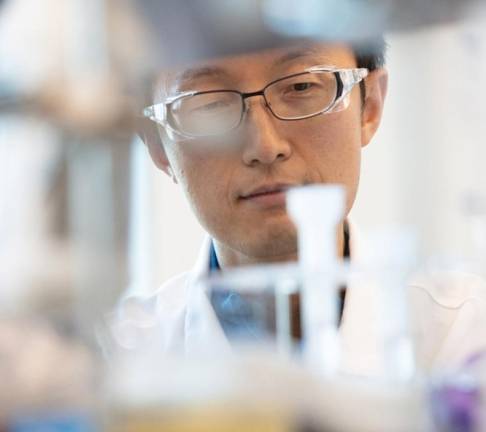
Our scientists are revolutionizing how we discover and develop treatments to address unmet medical needs in a number of areas, including neuroscience.
“It’s sort of like the final frontier,” said Joe Herring, scientific AVP, clinical research, in our new podcast. “You’re going off into space to try to figure out how to do very difficult things.”
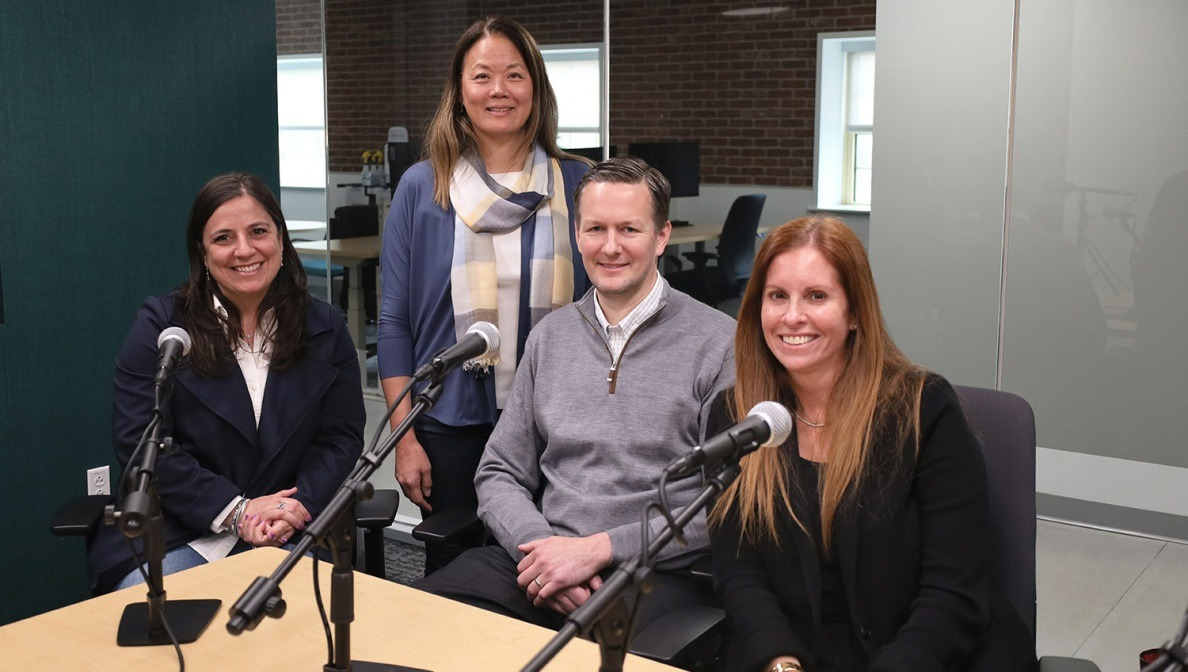
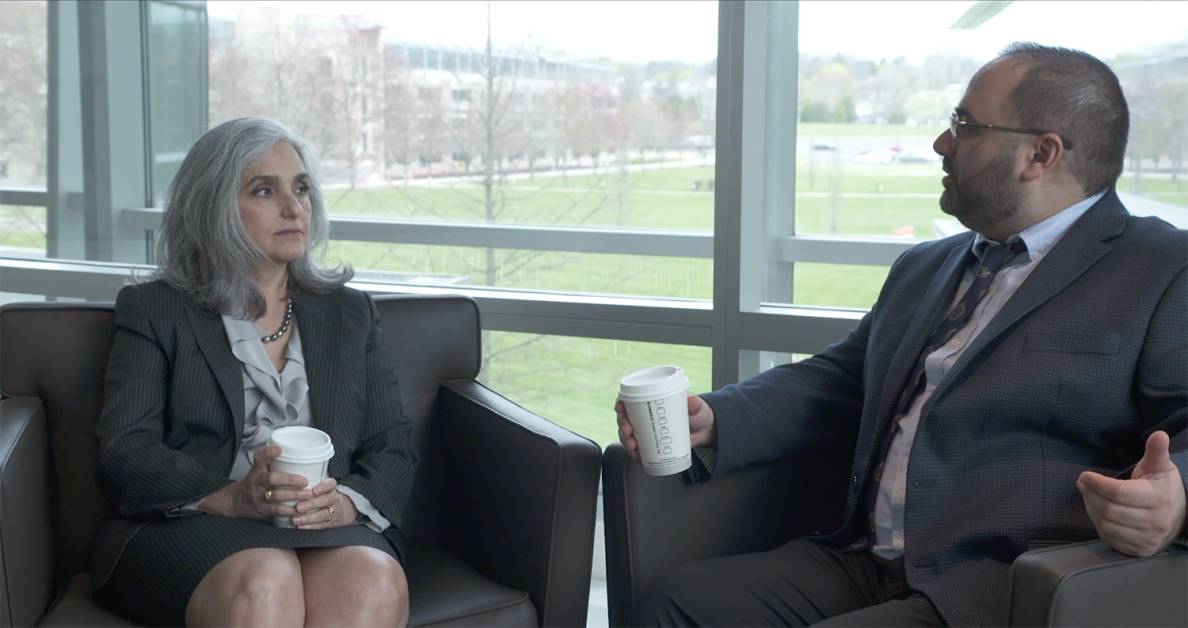
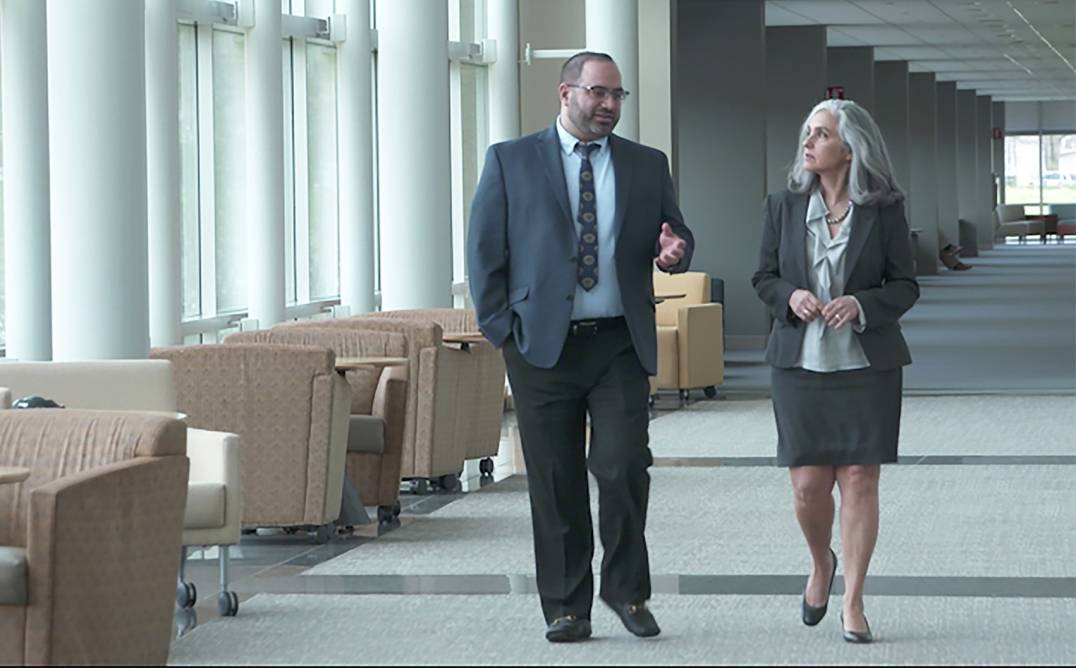
For more, listen in as Herring sits down with MSD clinical research team senior principal scientists Yuki Mukai and Ari Merola as well as business development director Paige Lacatena to explore today’s breakthroughs and challenges in the field of neuroscience.
MSD’s business development and licensing team explain how they identify new opportunities to strengthen our robust R&D pipeline
June 5, 2023
Share this article
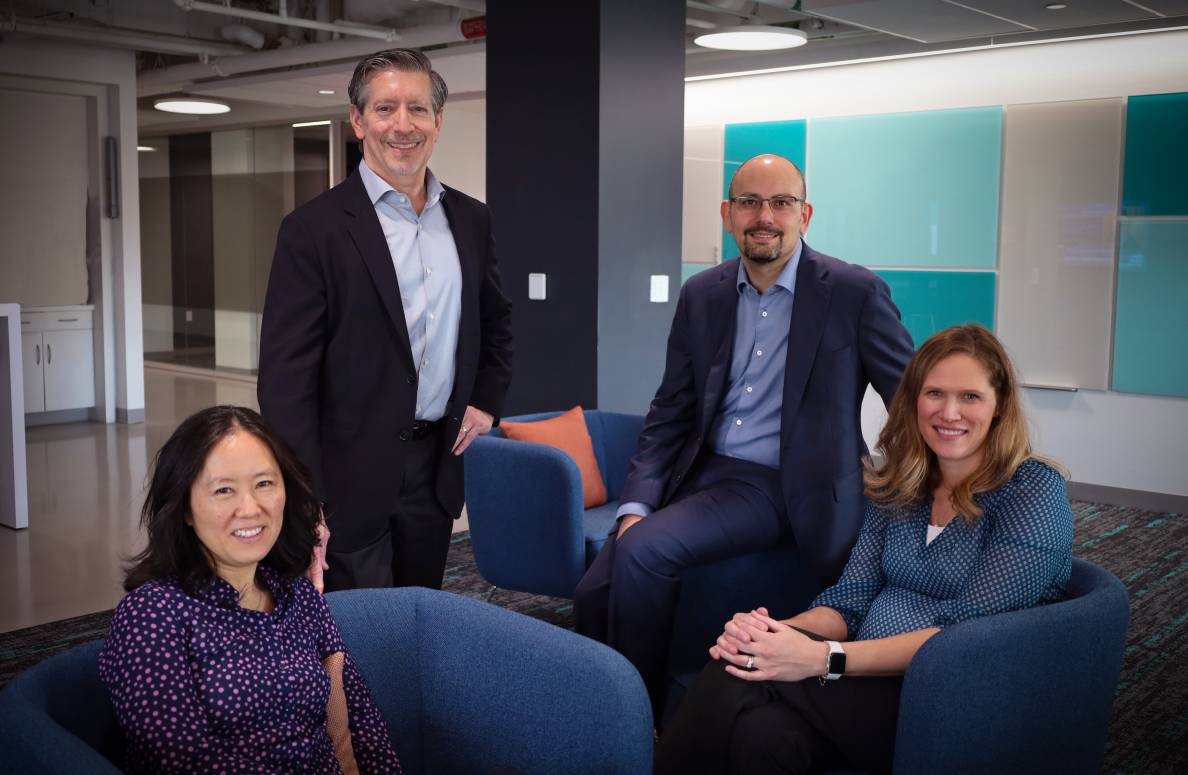
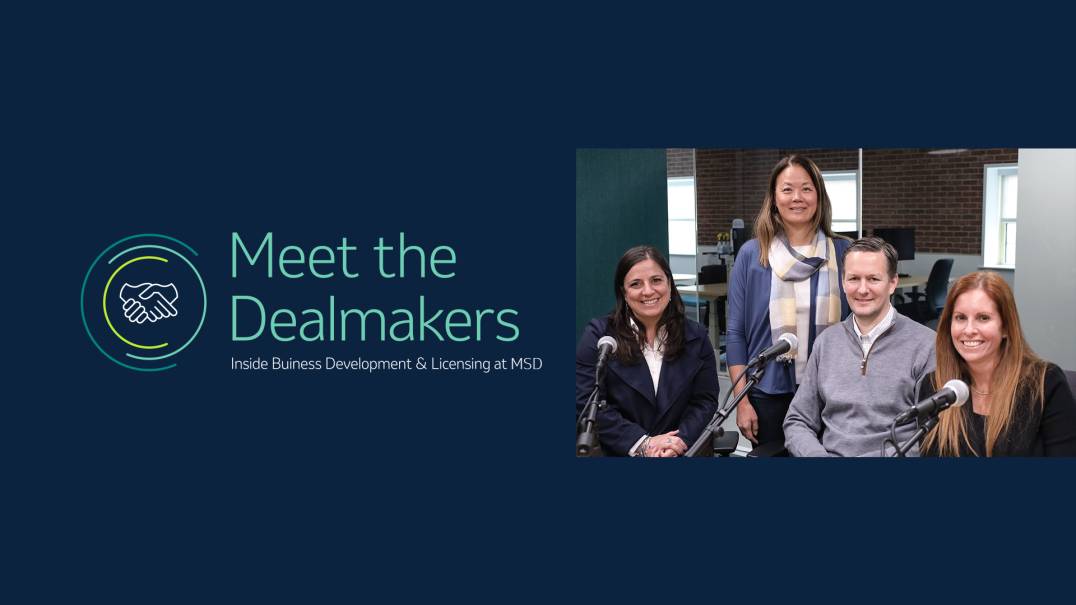
It takes a special kind of talent to find and secure the right deals to keep us at the forefront of innovation. Leaders from our business development and licensing team sat down to discuss how their work is a key component to building and maintaining a strong pipeline.
Here’s what you need to know:
01.
Harnessing our legacy
Our reputation for using leading-edge science can make business development connections easier, explains Lizabeth Leveille, vice president, business development.
02.
The speed and determination to get it done
Elizabeth Naldi-Jacob, vice president, business development, knows that having a direct line of reporting to the top is what sets MSD apart as a potential partner.
03.
Balancing the internal and the external
We have a one pipeline mindset, and each asset receives the same focus and rigor whether it comes from inside our company or out, says Christopher Mortko, vice president, business development.
04.
Working hand-in-hand with our scientists
Grace Han McMahon, associate vice president, business development, explains why engaging our internal science leaders is crucial to making the right deals.
05.
What we’re interested in (and why it’s everything)
Our panelists discuss why we focus on five key areas — and when we’re willing to look beyond them.
Great partnerships begin with great conversation. Learn more about how discovery & development and licensing shape the future of MSD.
Here for Good: Bridging the gap between bedside and bench
Members of MSD’s lung cancer clinical development team say working in the hospital inspired their drive to innovate for patients
May 19, 2023
Share this article
Dr. Ayman Samkari remembers how treating patients during his medical school rotations brought him face to face with the unmet needs of people with cancer. He learned to listen to what matters for patients beyond their diagnoses, and he sought new ways to make a greater impact as an oncologist.
Watch Samkari and Dr. Nazly Shariati discuss their passion for their work:
“Even though I enjoyed every moment of practicing medicine and treating patients with cancer, I had the question at the back of my mind: How can I do things differently? How can I improve patient outcomes?” recalled Samkari, who now works for MSD as executive director in oncology clinical development. “That’s what drove me to pursue my career in clinical research, where I could help patients on a larger scale.”
And after 25 years as a surgeon, when a hand ailment ultimately sidelined her in the operating room, Dr. Nazly Shariati found that research was another avenue to help more patients.
“MSD allowed me to not only fulfill my goals in life and my career but continue on my path to have an impact on patients’ lives.”
— Dr. Nazly Shariati
Senior principal scientist in oncology clinical development
From careers in clinical care to careers in research
Samkari’s background as an oncologist, and Shariati’s as a surgeon, have informed their work in our lung cancer clinical development program. All too familiar with the challenges of treating patients with advanced disease, Samkari and Shariati are shifting their research to investigating lung cancer at its earlier stages, before it has spread, when it’s more likely to be successfully treated.
When she was a cardiothoracic surgeon, Shariati often felt a sinking feeling whenever a patient’s lung cancer would return, which is common among people diagnosed with lung cancer that was removed surgically. But today she’s excited by scientific advances in resectable lung cancer focused on helping more patients.
Understanding the patient experience
Shariati said understanding the patient experience is what drives a researcher’s passion, innovation and desire to help others.
“It is very important to have that experience in managing and seeing patients because it gives you a completely different perspective on how you conduct your work.”
— Dr. Ayman Samkari
Executive director in oncology clinical development
Each day, Samkari and Shariati continue to push the boundaries in research to help make a difference for people living with cancer.
VIDEO: Here for Good – When passion and curiosity fuel innovation
Hear how one of our scientists balances her work and family life to accelerate our groundbreaking research
February 3, 2023
Share this article
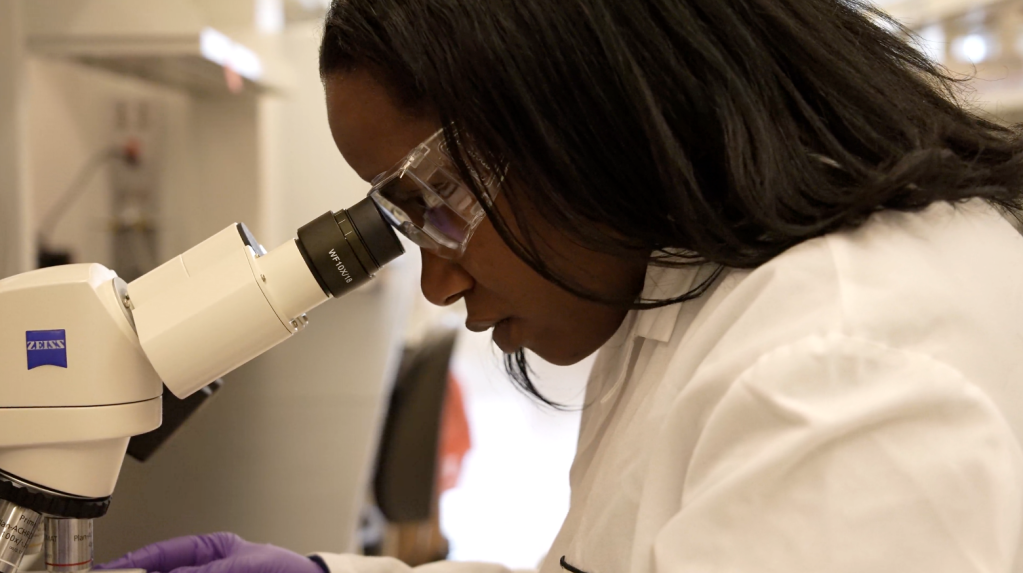
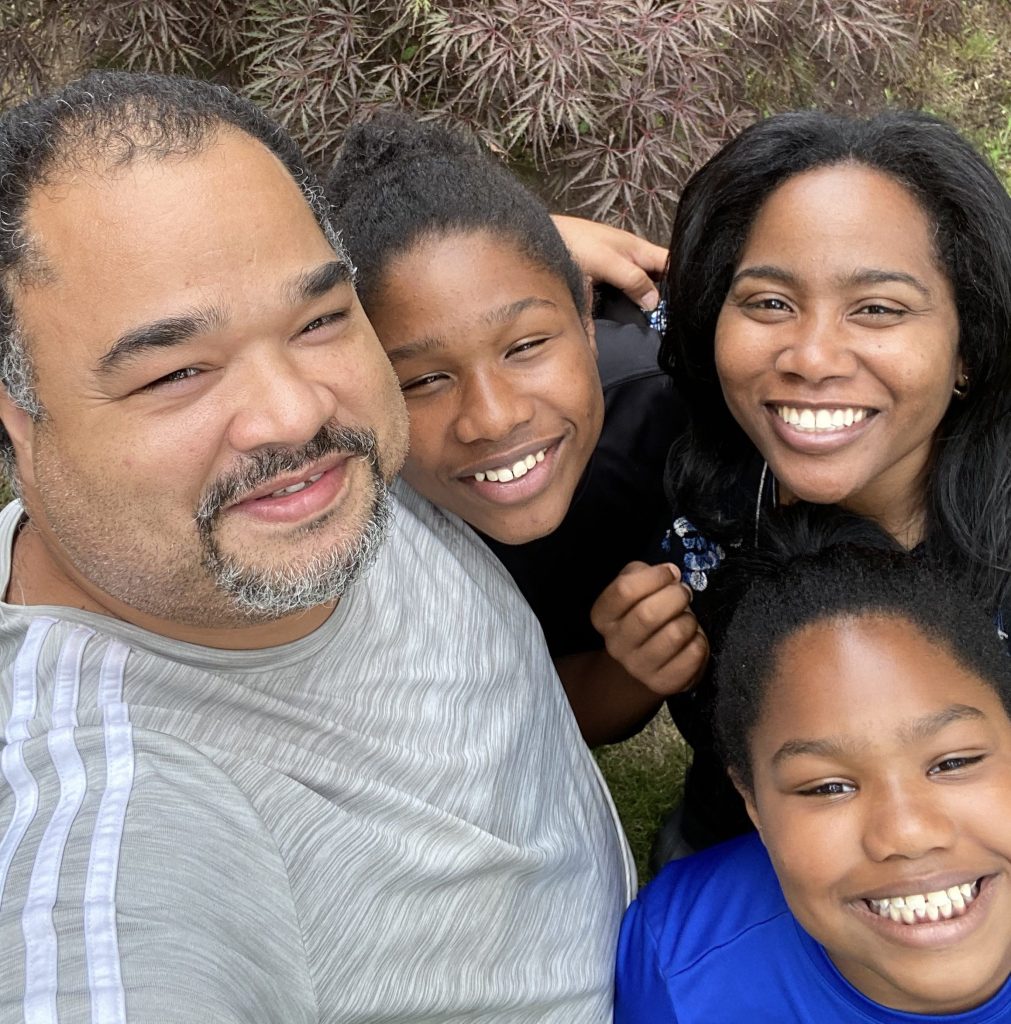
Testing experiments in a lab can be a lot like raising kids. Sometimes your molecules do what you want them to do, and sometimes they don’t. But it’s a challenge Denarra Simmons, a senior scientist at MSD and a mother of two, is always up for.
“You’re constantly trying to find other medicines because all medicines don’t work the same way for all people,” Simmons said.
“You spend the long nights thinking about experiments, how to make things better, how to move things faster to help more people.”
— Denarra Simmons
Simmons has been curious about how and why things work for most of her life. As a young child, she peppered her family with questions, trying to understand the “why” behind anything and everything. But it wasn’t until a man in a lab coat came to her grade school to talk about his career that she realized what her true passion was.
“He wrote an equation on the board and was talking about how people made medicines, and I thought that was fascinating,” Simmons said. “But the thing that really drew my attention was how excited he was when he was explaining what he did. I wanted to do something that I would love that much and over time, I realized that for me, it was science and helping people.”
For 12 years, Simmons has funneled that passion into her research at MSD. Simmons works in drug development to test the efficacy and safety of our biologic medicines used for investigational new drug (IND) enabling studies.
“Working in the lab is my favorite part of my job — and getting good data."
Some days in the lab may be more successful than others, and Simmons uses it all to show her children what it takes to be a scientist. “Good days are celebrated, and the tricky days, we keep working towards improving,” she said.
Simmons also feels strongly about teaching her children that there’s more to life than work.
“I’m always thinking about the experiments, but when I’m home with the children, I really try to give them the attention and time they need,” she said.
But once her daughter and son finish their homework and head to bed, Simmons finds herself thinking about her next set of experiments.
“When you find out a medicine you worked on has helped so many people, you feel really special and you know all the work has been worthwhile,” she said. “And that’s why you’re doing what you do: you’re making a difference in society.”
How vaccines can help prevent certain infectious diseases
By following recommended vaccination schedules, you can help protect yourself and loved ones from vaccine preventable diseases
August 8, 2022
Share this article
Managing your health can be tough. In recent years, we’ve been reminded how our health is truly global. Even though we’re worlds apart, what affects one could affect all.
Fortunately, there’s a lot you can do to help keep yourself and your family healthy. By staying up to date on recommended vaccinations, you can help prevent a variety of infectious diseases.
Health care providers are ready to help protect you. Talk to your health care provider about recommended vaccines for you and your family.
Infants and children
Adolescents
Adults
Your health care provider can help
When you’re preparing for an appointment, here are a few suggestions:
Create a list of questions to ask your doctor about your recommended vaccines.
Keep your doctor up to date on any changes to your child’s or your own health since the last visit.
Discuss any concerns about your child’s or your own health.
The Mectizan Donation Program is the longest-running, disease-specific drug donation program of its kind
May 25, 2022
Share this article
Our commitment: “as much as needed, for as long as needed…"
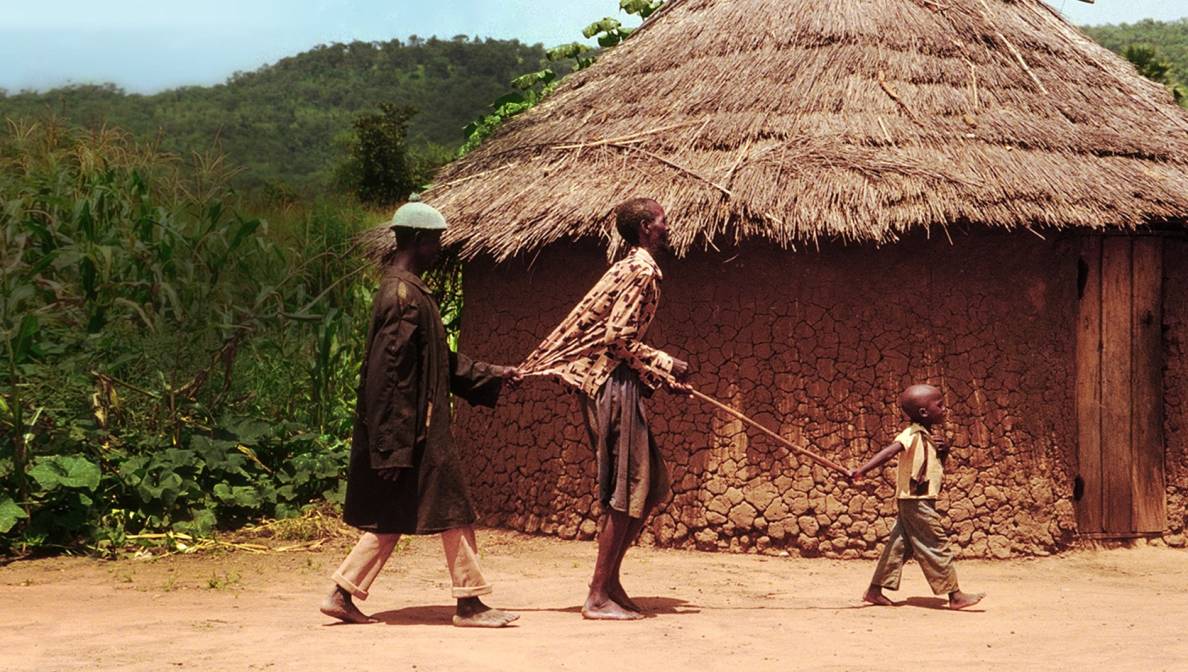
For centuries, river blindness — also known as onchocerciasis — plagued remote communities in Africa, Latin America and Yemen, and there was no answer to this affliction.
This all began to change in the mid-to-late 1970s when Dr. William Campbell of MSD Research Laboratories suggested the use of ivermectin (later named Mectizan) for river blindness in humans. Following the breakthrough lab work by Dr. Campbell, another MSD researcher, Dr. Mohammed Aziz, championed the clinical development of Mectizan. Dr. Aziz led the collaboration with the World Health Organization (WHO) in the early 1980s to design and implement field studies in West Africa that, ultimately, proved the effectiveness of the drug against river blindness.
In 1987, MSD committed to donate Mectizan – as much as needed, for as long as needed – with the goal to help eliminate river blindness.
MDP partners include: World Health Organization, the Task Force for Global Health, ministries of health, non-governmental development organizations, academic institutions and local communities in endemic communities.
A ground-breaking public-private partnership
In order to reach this goal, MSD leaders recognized that many organizations with unique skills would need to work together as a team. To enable this collaboration, MSD established the Mectizan Donation Program (MDP), a ground-breaking public-private partnership. Operating from the Atlanta-based Task Force for Global Health, the MDP coordinates technical and operational activities between MSD, WHO, endemic countries, and a range of public and private stakeholders.
Building on the successful implementation of the river blindness program, in 1998 MSD expanded its commitment to include donating Mectizan for another neglected tropical disease, lymphatic filariasis, also known as elephantiasis, in African countries and Yemen where it co-exists with river blindness. For lymphatic filariasis, Mectizan is administered with albendazole, a drug donated by GSK.
In November 2017, in support of new WHO guidelines, MSD announced an expansion of the program to reach up to an additional 100 million people per year through 2025 as part of the global effort to eliminate lymphatic filariasis.
More than thirty years later, the results of the MDP speak for themselves. Several countries in Africa are making significant progress towards eliminating both diseases. In Latin America, four countries – Colombia, Ecuador, Mexico and Guatemala – have received WHO verification of river blindness elimination. Lymphatic filariasis has now been eliminated in Togo, Yemen and Malawi. Both river blindness and lymphatic filariasis are on WHO’s list of neglected tropical diseases targeted for elimination globally.
Pioneering a community-directed approach
Today, the MDP is the longest-running, disease-specific drug donation program of its kind and has been influential in the development of a number of other drug donation programs. And, the MDP’s community-directed strategy used to distribute Mectizan has enabled add-on health services to be introduced in remote communities where health services are limited. The program reaches more than 300 million people in the affected areas annually, with more than 4.4 billion treatments donated since 1987.
People in the communities are an integral part of the distribution process in 49 countries where Mectizan has been distributed.
According to Uche Amazigo, former director of the African Programme for Onchocerciasis Control, “by engaging the people, the treatment coverage increased significantly.”
“This pioneering program has changed the face of global health over the past three decades,” said Yao Sodahlon, head of the MDP. “When I visit communities where Mectizan is donated, I can see how the program has helped alleviate suffering and allowed people to live better and healthier lives.”
What are river blindness and lymphatic filariasis?
River blindness (onchocerciasis)
River blindness is one of the leading causes of preventable blindness worldwide. Transmitted through the bite of black flies — which live and breed near fast-flowing streams and rivers — and can cause intense itching, permanent skin and eye lesions and, over time, blindness. It has historically been prevalent in remote rural areas of 36 countries (in Africa, Latin America, and in Yemen.)
Lymphatic filariasis (LF)
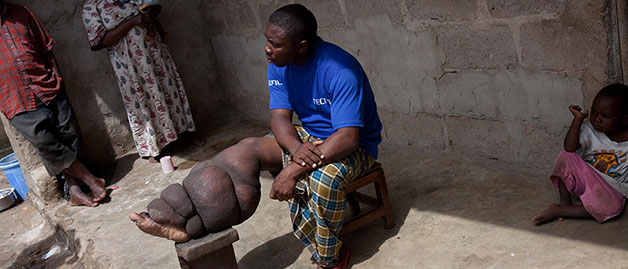
Also known as elephantiasis, LF results in disfiguring swelling in the limbs and genitals. Parasitic infection spread by mosquitoes and damages the human lymphatic system. More than 1.3 billion people are at risk, and 30 percent of those infected live in Africa.
35 years later, results of this program speak for themselves
More than 4.4 billion cumulative treatments
Donations to 49 countries
Through the efforts of a variety of partners, more than 4.4 billion treatments have been donated to 49 countries in Africa, Latin America, Eastern Mediterranean, Asia, and South Pacific. River blindness transmission has been interrupted – meaning no new cases have been identified – in four of the six affected countries in Latin America and regions in five African countries. The program reaches more than 300 million people annually.
Today, the MDP is the longest-running, disease-specific drug donation program of its kind.
“We are proud of the positive difference that the Mectizan Donation Program has made in the lives of so many people, their families and communities, and health care systems over the years. Together, with our alliance of partners, we will continue to support endemic countries in their commitment to eliminate these devastating diseases.”
Rob Davis, CEO and President, MSD
Explore our history of helping bring treatment to those afflicted by river blindness and elephantiasis
1978
Dr. William Campbell of MSD Research Laboratories suggests the use of Mectizan (ivermectin) against onchocerciasis (river blindness) in humans.
1981
The first human clinical trials begin in Dakar with the first patient receiving a single dose.
1987
MSD CEO Dr. Roy Vagelos announces the company’s commitment to donate Mectizan to treat river blindness — as much as needed, for as long as needed — the MDP is formed.
1988
The Mectizan Expert Committee meets for the first time to establish the strategy for distribution and the donation review process. Mectizan has been produced at the MSD plant in Haarlem, the Netherlands, since the beginning of the program.
1991
MSD, the MDP Secretariat and WHO establish the Non-Governmental Development Organization (NGDO) Coordination Group for Onchocerciasis Control. NGDOs play a critical role in Mectizan distribution through their work with ministries of health and local communities, expertise in program management, and financial support.
1993
The Onchocerciasis Elimination Program for the Americas (OEPA), formed by the River Blindness Foundation and currently sponsored by The Carter Center, brings together the ministries of health of six countries in Latin America affected by onchocerciasis.
1995
WHO, the World Bank, international NGOs, and 19 African countries partner to create the African Program for Onchocerciasis Control (APOC), providing a structure for financial support and coordination of river blindness control efforts.
1998
MSD begins a partnership with GSK to expand the MDP to include the elimination of LF, commonly referred to as elephantiasis, in African countries and in Yemen.
MSD and the MDP celebrate the 100 millionth treatment in Uganda.
1999
The iconic river blindness statue, “Sightless Among Miracles” by sculptor R. T. Wallen, is dedicated at WHO headquarters in Switzerland. Identical statues are also found at The Carter Center (Georgia, USA), the World Bank (Washington, D.C., USA), the Royal Tropical Institute (Amsterdam, the Netherlands), MSD (New Jersey, USA) and Lions Club International Foundation (Illinois, USA).
2002
In Tanzania, MSD CEO Raymond
Gilmartin celebrates the 250 millionth
treatment distributed.
2008
The Pan American Health Organization passes a resolution calling for the interruption of transmission of river blindness in the Americas by the year 2012.
WHO confirms the potential for elimination of river blindness in some parts of Africa through current treatment strategies.
2010
MSD reaffirms its commitment to the MDP. MSD “will continue to [donate Mectizan] until river blindness becomes a disease of the past,” said MSD CEO Richard T. Clark.
2011
Colombia becomes the first country to apply for WHO certification for the elimination of onchocerciasis transmission after suspending treatment with Mectizan in 2007.
2012
MSD CEO Kenneth C. Frazier commemorates the 25th anniversary of the MDP at a celebratory event in London.
2013
WHO verifies that Colombia has eliminated onchocerciasis, thus becoming the first country in the world to achieve this goal.
2014
WHO verifies the elimination of onchocerciasis in Ecuador. Ecuador worked in partnership with the MDP and a number of other organizations and now becomes the second country in the world to be free of this disease.
2015
WHO verifies the elimination of onchocerciasis in Mexico, the third country in the world to be free of river blindness.
Dr. William C. Campbell, Ph.D., is jointly awarded the Nobel Prize in Physiology or Medicine for the discovery of avermectin, which led to a treatment for river blindness. Dr. Campbell performed his Nobel Prize-winning work at MSD Research Laboratories in Rahway, N.J., where he worked from 1957 until his retirement in 1990.
2016
WHO verifies the elimination of onchocerciasis in Guatemala thanks to a partnership with the MDP and a number of other organizations. With this milestone, four of the six countries in the Americas historically at-risk for river blindness now have verified elimination of the disease.
2017
Togo becomes the first country in Africa recognized by WHO to have eliminated LF as a public health problem.
MSD announces an expansion of the MDP to reach up to an additional 100 million people per year through 2025 as part of the global effort to eliminate LF.
2019
WHO verifies the elimination of LF as a public health problem in Yemen. The Mectizan Expert Committee meets in Togo and presents the Ministry of Health with the Lymphatic Filariasis Elimination Award.
2020
WHO verifies the elimination of LF as a public health problem in Malawi.
2021
MDP and MSD announce a $500,000 donation to strengthen laboratory capacity to support onchocerciasis elimination in Africa in partnership with WHO’s Collaborating Centre for Onchocerciasis Diagnostics at the College of Public Health, University of South Florida.
2022
MSD and MDP mark the 35th anniversary of the program.
Podcast: How to bridge diversity gaps in cancer clinical trials
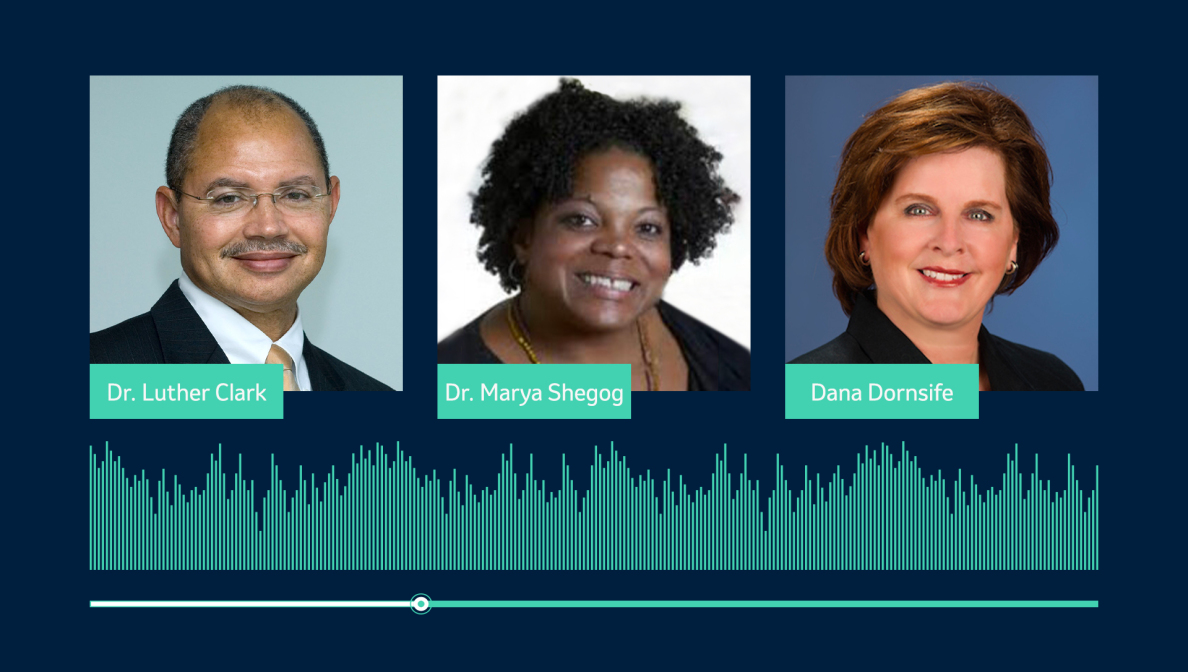
Luther Clark talks with Lazarex Cancer Foundation's Dana Dornsife and Marya Shegog about increasing access among historically underrepresented communities
May 17, 2021
Share this article
Diversity in cancer clinical trials is essential to show if potential treatments are safe and work well for people of all different communities. That’s why it’s crucial to break down barriers and increase participation in cancer clinical trials among historically underrepresented communities.
In this podcast, Luther Clark, MSD’s deputy chief patient officer, speaks with the Lazarex Cancer Foundation’s founder and CEO, Dana Dornsife, and its health equity and diversity coordinator, Marya Shegog, about the work they’ve been doing — and the work that still needs to be done — to foster health equity through cancer clinical trials.
Forward-Looking Statement of Merck & Co., Inc., Rahway, N.J., USA
This website of Merck & Co., Inc., Rahway, N.J., USA (the “company”) includes “forward-looking statements” within the meaning of the safe harbor provisions of the U.S. Private Securities Litigation Reform Act of 1995. These statements are based upon the current beliefs and expectations of the company’s management and are subject to significant risks and uncertainties. There can be no guarantees with respect to pipeline candidates that the candidates will receive the necessary regulatory approvals or that they will prove to be commercially successful. If underlying assumptions prove inaccurate or risks or uncertainties materialize, actual results may differ materially from those set forth in the forward-looking statements.
Risks and uncertainties include but are not limited to, general industry conditions and competition; general economic factors, including interest rate and currency exchange rate fluctuations; the impact of pharmaceutical industry regulation and health care legislation in the United States and internationally; global trends toward health care cost containment; technological advances, new products and patents attained by competitors; challenges inherent in new product development, including obtaining regulatory approval; the company’s ability to accurately predict future market conditions; manufacturing difficulties or delays; financial instability of international economies and sovereign risk; dependence on the effectiveness of the company’s patents and other protections for innovative products; and the exposure to litigation, including patent litigation, and/or regulatory actions.
The company undertakes no obligation to publicly update any forward-looking statement, whether as a result of new information, future events or otherwise. Additional factors that could cause results to differ materially from those described in the forward-looking statements can be found in the company’s Annual Report on Form 10-K for the year ended December 31, 2025 and the company’s other filings with the Securities and Exchange Commission (SEC) available at the SEC’s Internet site (www.sec.gov).
No Duty to Update
The information contained in this website was current as of the date presented. The company assumes no duty to update the information to reflect subsequent developments. Consequently, the company will not update the information contained in the website and investors should not rely upon the information as current or accurate after the presentation date.